

Updated: July 05, 2026
When you start thinking about how to find the most affordable place to live near New York City, problems immediately arise. It's a little more complicated than just moving outside of Manhattan. Low rent or buying an inexpensive house isn't always such a good deal. You need to consider a number of factors, such as transportation, actual travel time, parking costs, utilities, and taxes.
In short, based on total monthly costs — including rent, transportation, taxes, and utilities - the cheapest place to live near NYC for most renters is Newark, New Jersey. It offers one of the lowest rents among cities with direct rail access to Manhattan, while keeping commute times within a realistic daily range. Other locations may be cheaper on paper, but once transportation and hidden costs are included, they often lose their advantage.
Right now, we are only considering locations that are suitable for regular trips to NYC. The list includes affordable cities and suburbs in New Jersey, the Lower Hudson Valley, parts of Connecticut, and certain areas of Pennsylvania. We did not consider cheaper but more remote cities, as accessibility and convenience of travel to New York should be a priority.
We tried to take into account the actual monthly cost of living, not limiting ourselves to rent alone, but also considering taxes, transportation costs, seasonal expenses, and utility bills. We will discuss this in more detail below.
Methodology and data transparency
To determine the cheapest places to live near New York City, we did not limit ourselves to rentals cheaper than Manhattan. In this article, “cheapest” means lowest total monthly cost, not lowest rent. We believe it is necessary to show where it is actually cheaper to live after taking into account travel to New York City, taxes and all mandatory monthly payments.
To estimate rents, we used the latest available 2026 rental data from major listing platforms, focusing primarily on one-bedroom apartments. As a rule, one-bedroom apartments are rented so we based our calculations on them. We also took the median prices of completed transactions for home purchases excluding isolated cheap offers. We estimated property taxes as the average rates at the county level for a median-priced home. This will help us roughly balance the conditions.
We calculated travel time to NYC based on commuter train and bus schedules: NJ Transit, Metro North, and PATH. For personal vehicles, we used typical rush hour ranges. We believe this is a more realistic scenario that also allows us to estimate travel time and what may actually affect accessibility.
The cost of living index was used as a supplementary benchmark. It helps to verify the overall structure of expenses, but is not a major factor in the ranking, as it does not adequately reflect transportation and local taxes, which are critical for living near New York City.
We gave priority to rent or mortgage when calculating the final score. These items account for half of the final assessment. The second main factor was accessibility: the length and convenience of the commute to work has a greater impact on quality of life than the difference in housing prices between neighboring cities. There are studies that confirm this. We also took into account transportation costs, including commuting and parking, as well as taxes and utility bills.
It is important to understand that the actual cost of living near New York always depends on the specific address, route, and work schedule. This article shows a realistic range of expenses that helps you compare cities and avoid typical mistakes when choosing a “cheap” place near NYC.
The cheapest places to live near NYC, grouped by commute corridors
We have selected 11 locations that are truly suitable for living near New York: they are within a reasonable commute time and remain affordable after taking into account transportation, taxes, and daily expenses. The list is broken down by commute corridors, making it easier to compare options and understand the trade-offs.
New Jersey: Best Value with Quick Access to Manhattan
New Jersey is certainly the first choice and the most obvious option if you want to reduce your expenses while still being able to commute to New York City every day. PATH, NJ Transit, and bus corridors will get you to Midtown and Lower Manhattan faster than from some, or even many, areas of New York City. However, the difference in the cost of living within the state can be significant, so let's take a closer look.
Jersey City, NJ
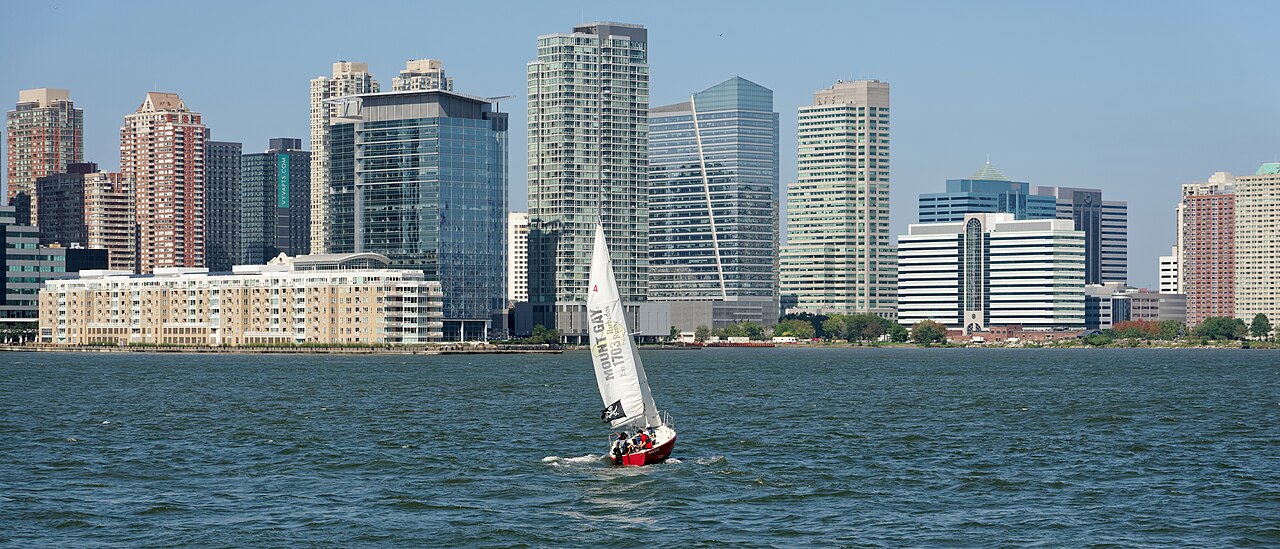
Jakub Hałun, CC BY 4.0, via Wikimedia Commons
Jersey City combines a number of obvious advantages, the main one being the travel time to New York. The trip to Manhattan takes about 20-35 minutes.
You will mainly have to use the PATH, ferry, and select NJ Transit lines to get there. The PATH remains the most convenient option for traveling downtown, but the platforms are often crowded during rush hour. The ferry is slightly more expensive.
According to Zillow, the average rent for a one-bedroom apartment is $2,300 per month. Jersey City is not the cheapest by rent, but often one of the cheapest per minute of commute.
Of the affordable areas in the city, we recommend Journal Square and parts of Jersey City Heights. Downtown offers the best access to infrastructure, but real estate prices are obviously higher there. The city is suitable for those who commute to NYC 4-5 days a week and are willing to pay for minimal travel time.
Newark, NJ
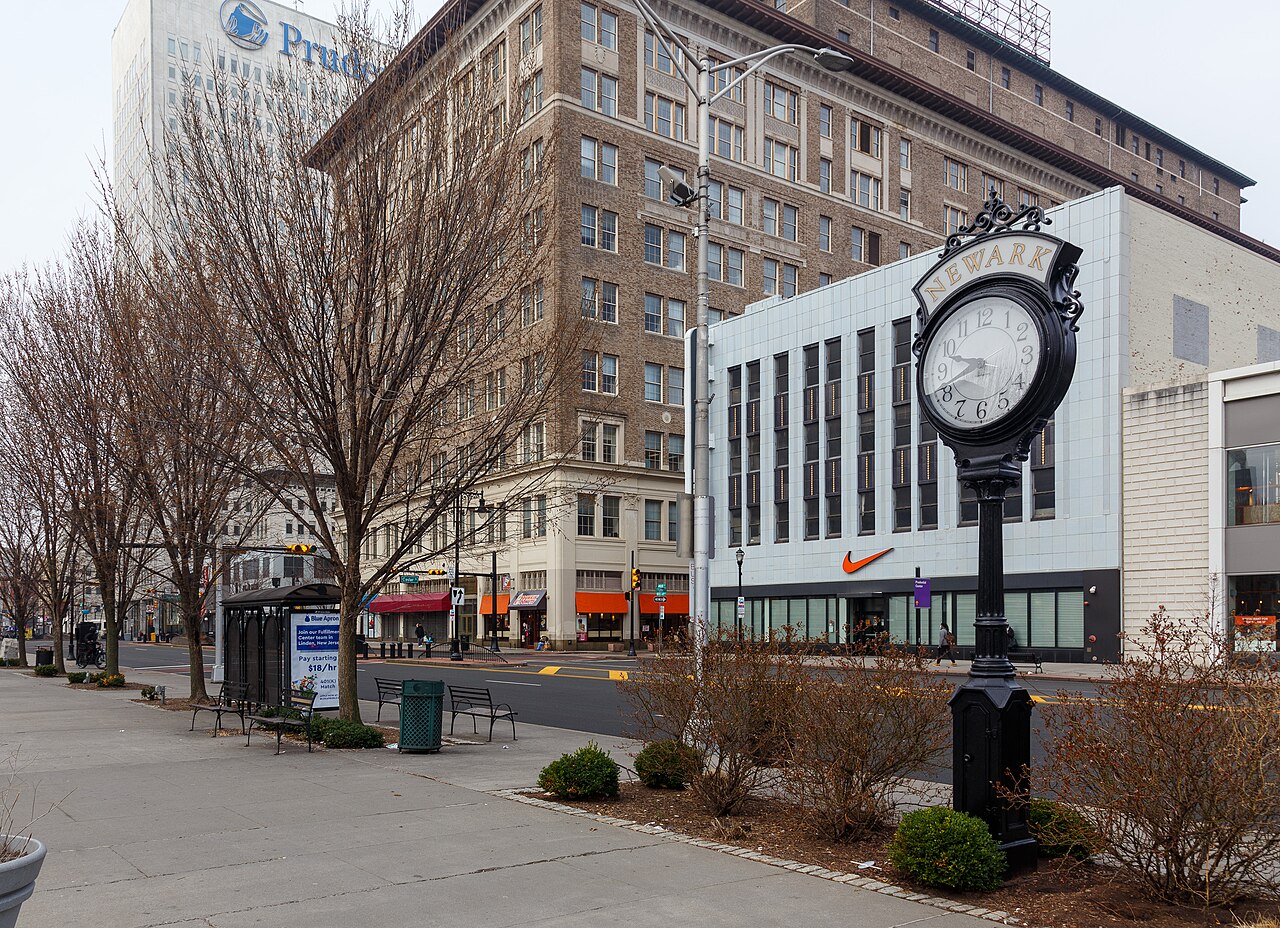
Kenneth C. Zirkel, CC BY-SA 4.0, via Wikimedia Commons
Newark combines affordable rent and good transport links. The journey time to New York is 25-40 minutes, which is comparable to Jersey City. This is because Newark is a transport hub. NJ Transit lines run here as well as PATH connections via Harrison.
When choosing a place to live, it is very important to choose the right neighborhood. The Ironbound and northern parts of the city, located closer to the stations, are considered the most convenient for daily commutes. However, keep in mind that parking is limited at the stations and you will most likely have to arrive early.
At the same time, rents in Newark are significantly lower. According to Zillow, renting a one-bedroom apartment will cost you an average of $1,600. The main advantage of Newark is the price. However, there are stark differences within the city in terms of safety, schools, and quality of life. This is why Newark often ends up being the cheapest place to live near NYC in real monthly terms, not just by rent -especially for renters who commute regularly.
Elizabeth, NJ
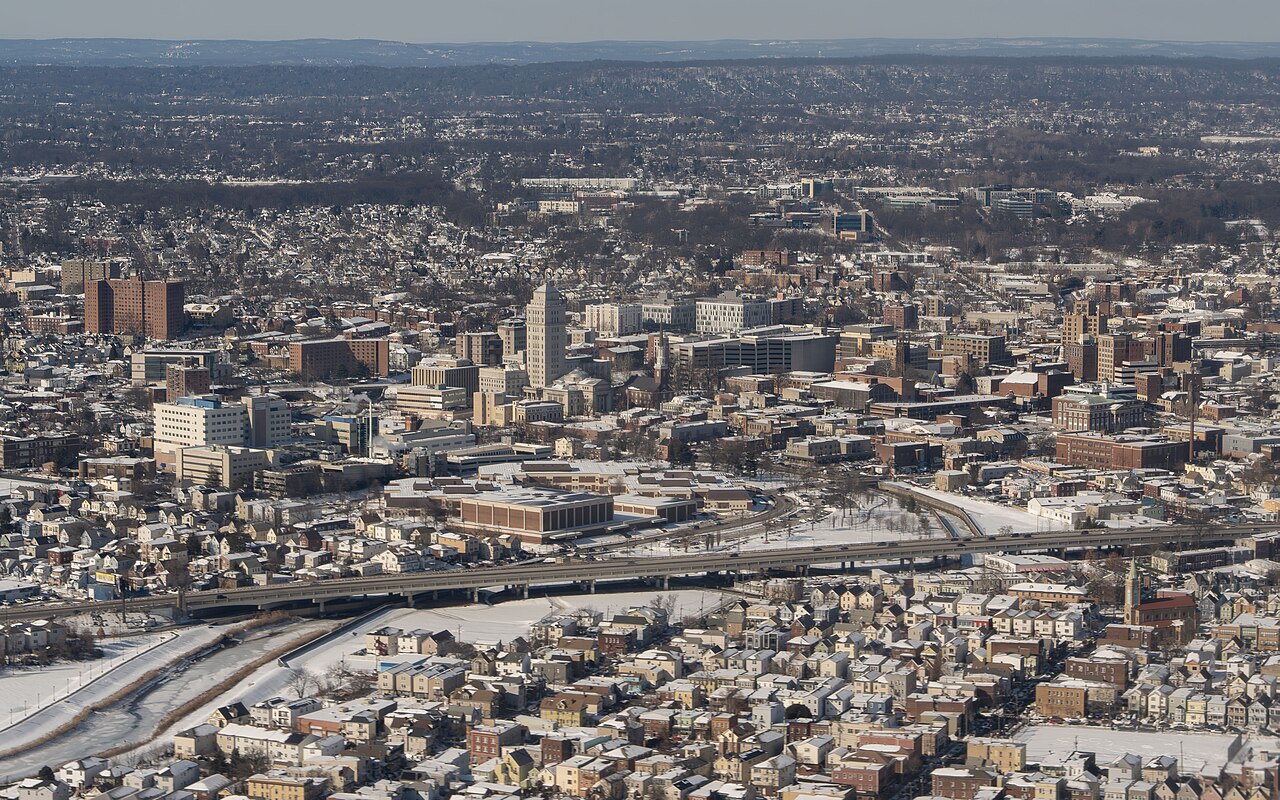
Quintin Soloviev, CC BY 4.0, via Wikimedia Commons
Elizabeth competes with Newark in terms of rental prices. According to Zillow, the average cost of renting a one-bedroom apartment is $1,700. The commute to Manhattan takes 30-45 minutes, depending on where you start. The main modes of transportation are NJ Transit and bus lines, but in everyday life, a car is often necessary, especially outside of areas near stations.
At the same time, the city is considered more peaceful when compared to Newark. It is most convenient to live near North Elizabeth station, from where it is easier to get to New York.
Elizabeth is suitable for those who travel to NYC several times a week and want to reduce housing costs while maintaining an acceptable commute time. It is not the best option for a completely car-free lifestyle, but it often wins in terms of price and accessibility. Also, despite the need to have a car in the city, there are often difficulties with parking spaces.
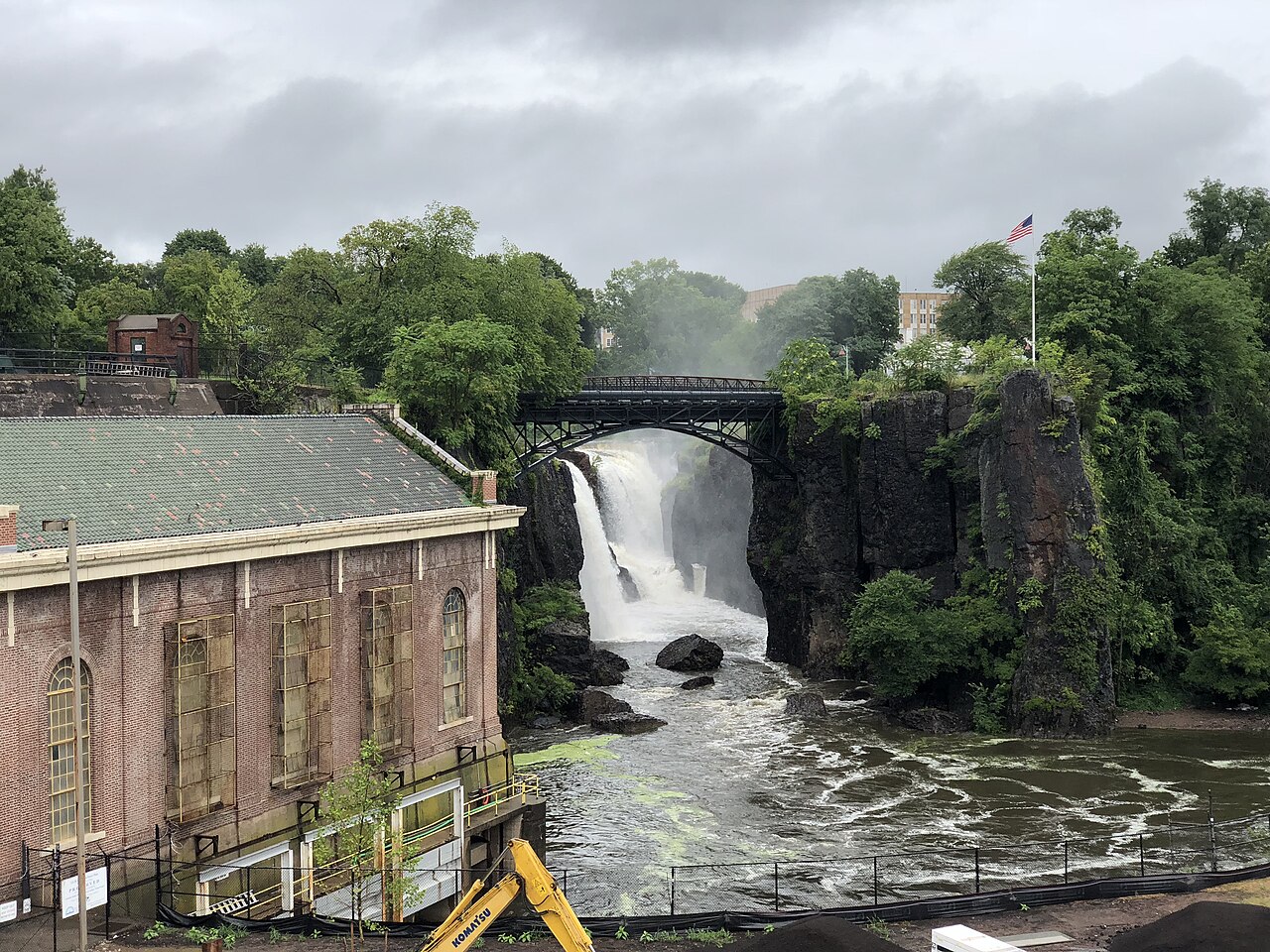
Paterson, NJ
Famartin, CC BY-SA 4.0, via Wikimedia Commons
Paterson is one of the most affordable options for buying a home near New York City. Prices here remain among the lowest in northern New Jersey, but this comes at the cost of increased commute times and additional logistical challenges. Renting a one-bedroom apartment will cost you $1,700 per month according to Zillow, and the commute to Manhattan takes about 45-60 minutes with transfers.
It is better to live in Paterson if you have a car. The western parts of the city are generally considered more convenient for everyday life, but the differences between neighborhoods here are particularly pronounced. Schools and safety levels vary greatly depending on the specific neighborhood.
Paterson is most often chosen by people on a tight budget or those who don't commute to New York every day. This is an example of a location where low housing prices only really work if you have a flexible schedule and are willing to compromise.
Lower Hudson Valley, Westchester: Balancing trains, taxes, and schools
The suburbs north of New York City are often seen as a quieter and more family-friendly alternative to New Jersey. Trains run more reliably here, and school districts generally have a better reputation. But there is a price to pay for this - primarily higher taxes and housing prices near Metro-North stations. Therefore, the overall affordability in this direction is largely determined by the specific city and how close the housing is to the train.
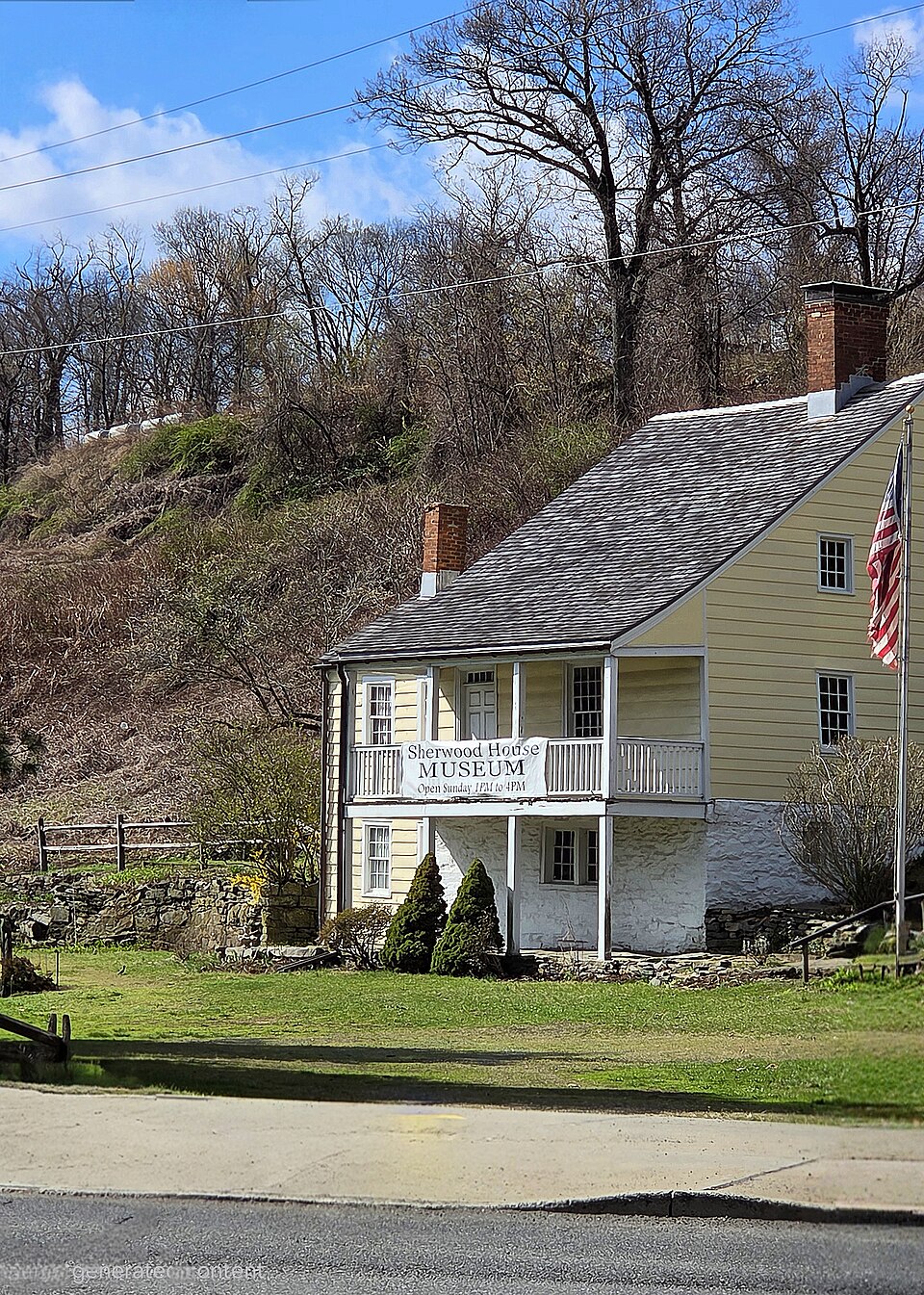
Yonkers, NY
Irina S.B., CC BY 4.0, via Wikimedia Commons
Yonkers is the closest city to New York City in this corridor and one of the few in Westchester where you can still find relatively affordable housing. Rents here are lower than in most cities in the county, averaging around $2,100 for a one-bedroom apartment, according to Zillow. The Metro-North train will get you to Midtown in about 30-45 minutes, making the city convenient for daily commutes.
If you live near the Hudson Line stations, you can live comfortably without a car, but it will be significantly more expensive.
If you plan to buy a home, property taxes should be checked at the address level, since Westchester taxes can be high and vary significantly by municipality and school district.
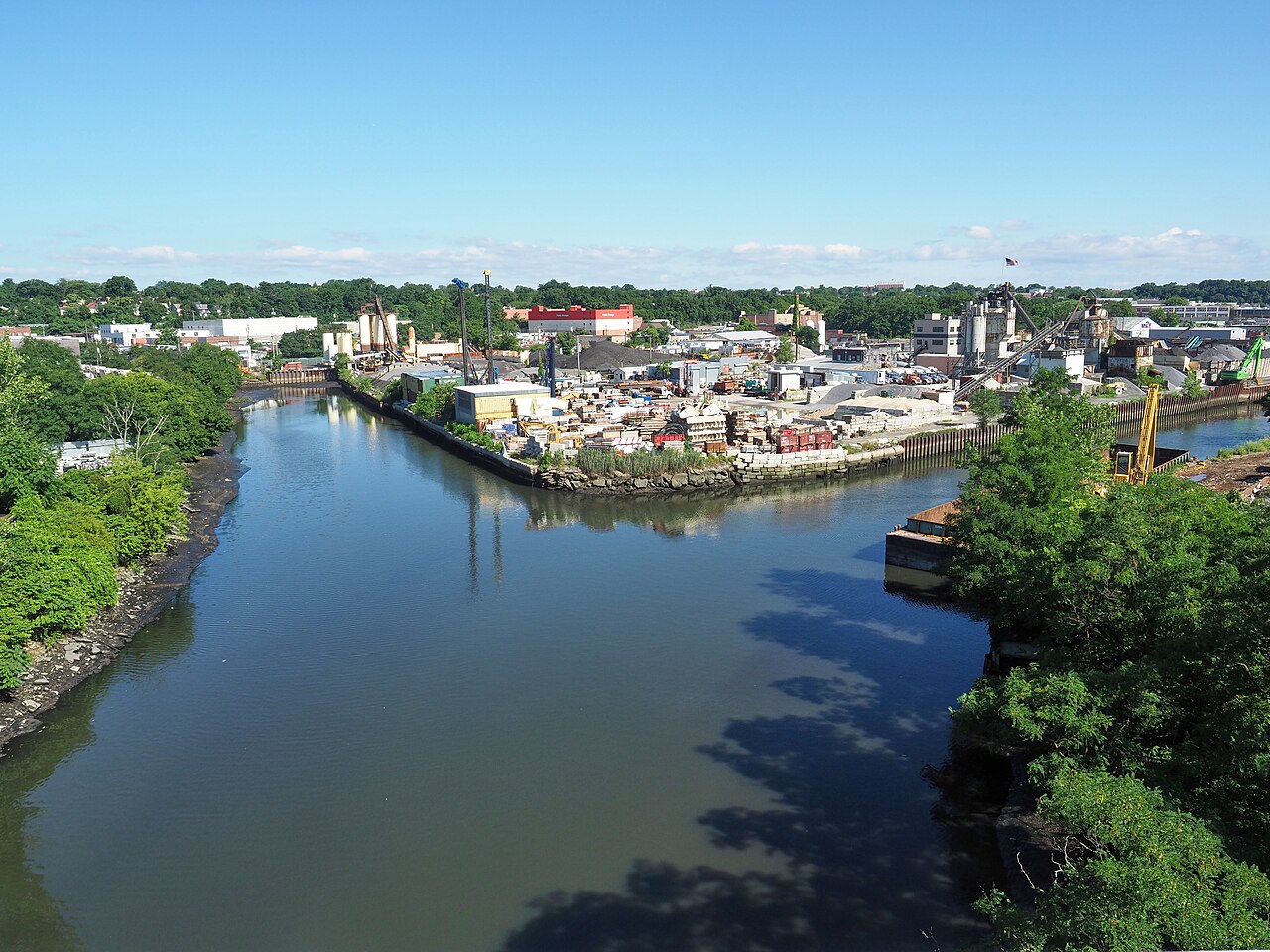
Mount Vernon, NY
RoySmith, CC BY-SA 4.0, via Wikimedia Commons
Mount Vernon is often on the radar of those looking for a more affordable alternative to southern Westchester. Overall, the commute time is about the same as from Yonkers. If you live with children, keep in mind that the schools here are slightly worse than the Westchester average.
The obvious advantages here are the railroad and the average rent for a one-bedroom apartment, which is $2,000.
The eastern areas closer to the stations are often considered the most practical for commuting to the city.
Mount Vernon is most often chosen by tenants and buyers who prioritize the railroad over the status of the school district.
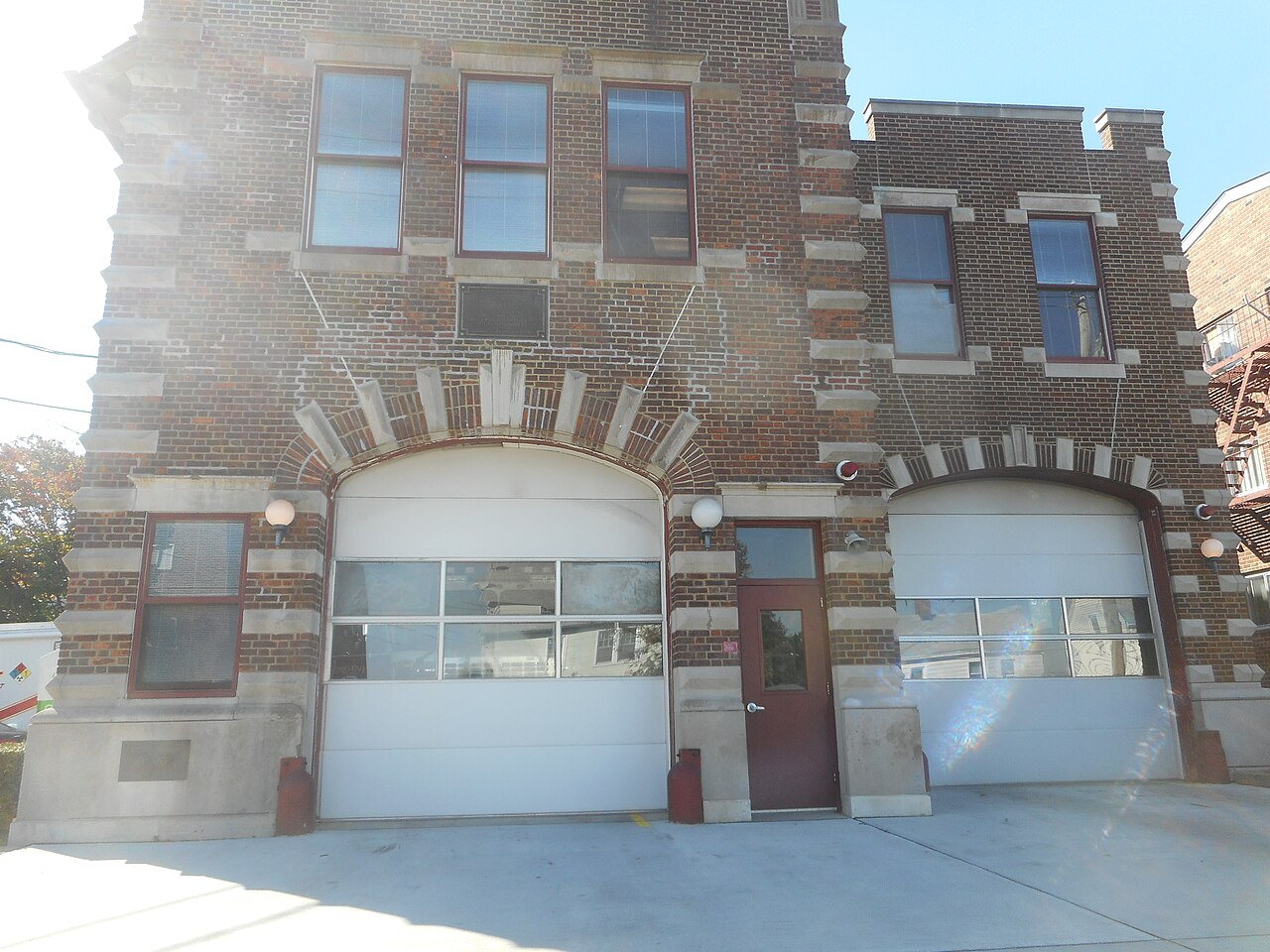
New Rochelle, NY
DanTD, CC BY-SA 4.0, via Wikimedia Commons
Renting an apartment in New Rochelle will be slightly more expensive. According to Zillow, the average rent for a one-bedroom apartment is $2,650 per month. However, there are a number of advantages. For example, there are frequent trains to Grand Central, and the journey time is 35-45 minutes. The schools here are also better than in neighboring cities.
In the case of buying a home, there will again be a higher tax burden. However, it is much quieter here, and we can recommend New Rochelle for families and professionals with a stable income who value schools and frequent trains over a minimal budget.
Overall, the Lower Hudson Valley and Westchester offer a more predictable and stable commute compared to the bus corridors of New Jersey, but affordability here declines rapidly due to taxes and the “railroad surcharge.” These locations often win in terms of quality of environment but lose in terms of net cost of living.
Connecticut: accessibility provided by rail
Connecticut is also usually considered as an alternative to New Jersey and Westchester. However, we have set a key condition: proximity to Metro-North. Without the train, Connecticut loses its appeal as a place to live near NYC.
At the same time, Connecticut is quite peaceful. However, accessibility here is different, as transportation, utilities, and taxes are slightly higher. Therefore, it is only cheap here if you are selective about your future place of residence.
Bridgeport, CT
Quintin Soloviev, CC BY 4.0, via Wikimedia Commons
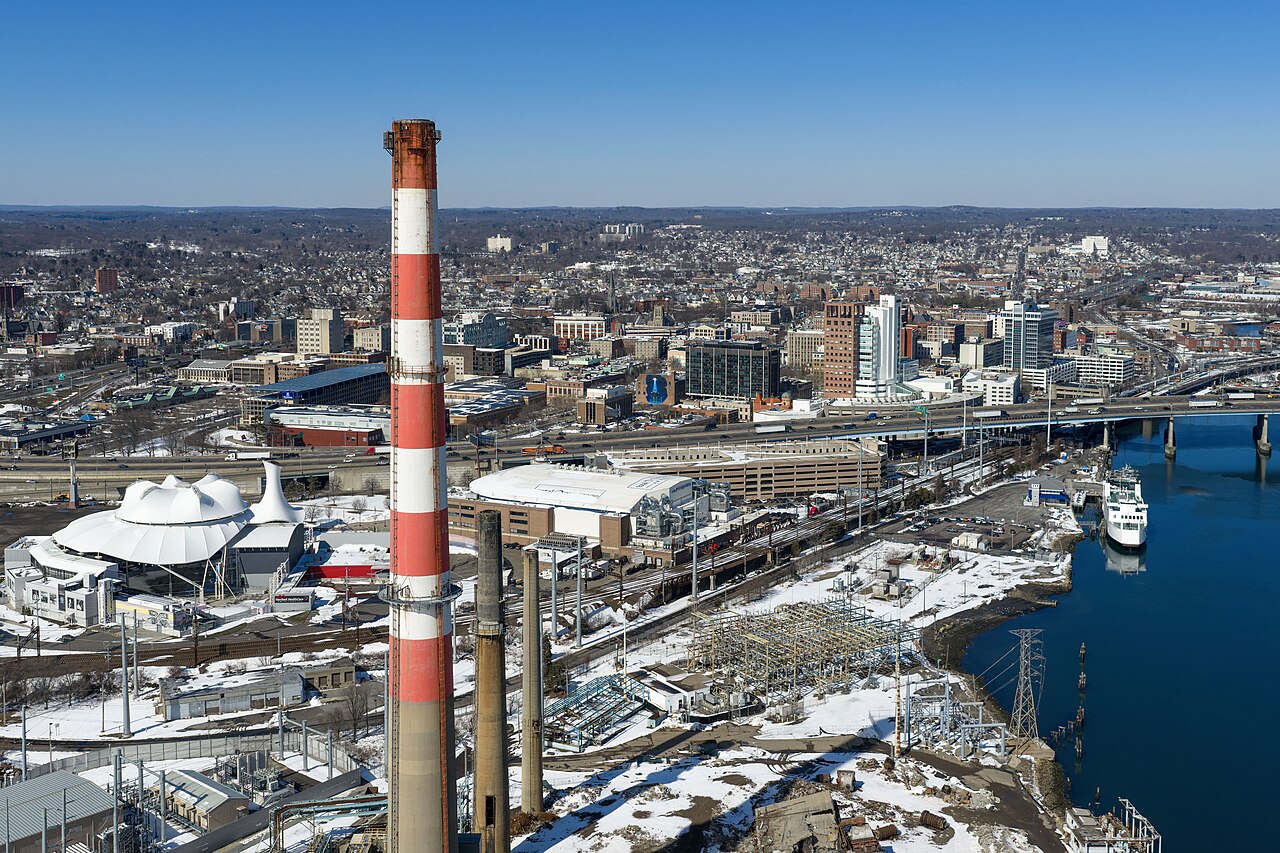
Bridgeport will pleasantly surprise you with its rental prices. On average, according to Zillow, renting a one-bedroom apartment will cost $1,600 per month. The New Haven Metro-North line is key for trips to New York, and the travel time to Manhattan is 75-85 minutes. Keep in mind that some areas of Bridgeport differ significantly in terms of standard of living.
Most often, people who move here are those for whom commute time is not a priority. If you work remotely and only visit the office occasionally, then living here is very convenient. After all, commuting 5 days a week takes up a lot of time.
Stamford, CT
John9474, CC BY-SA 4.0, via Wikimedia Commons
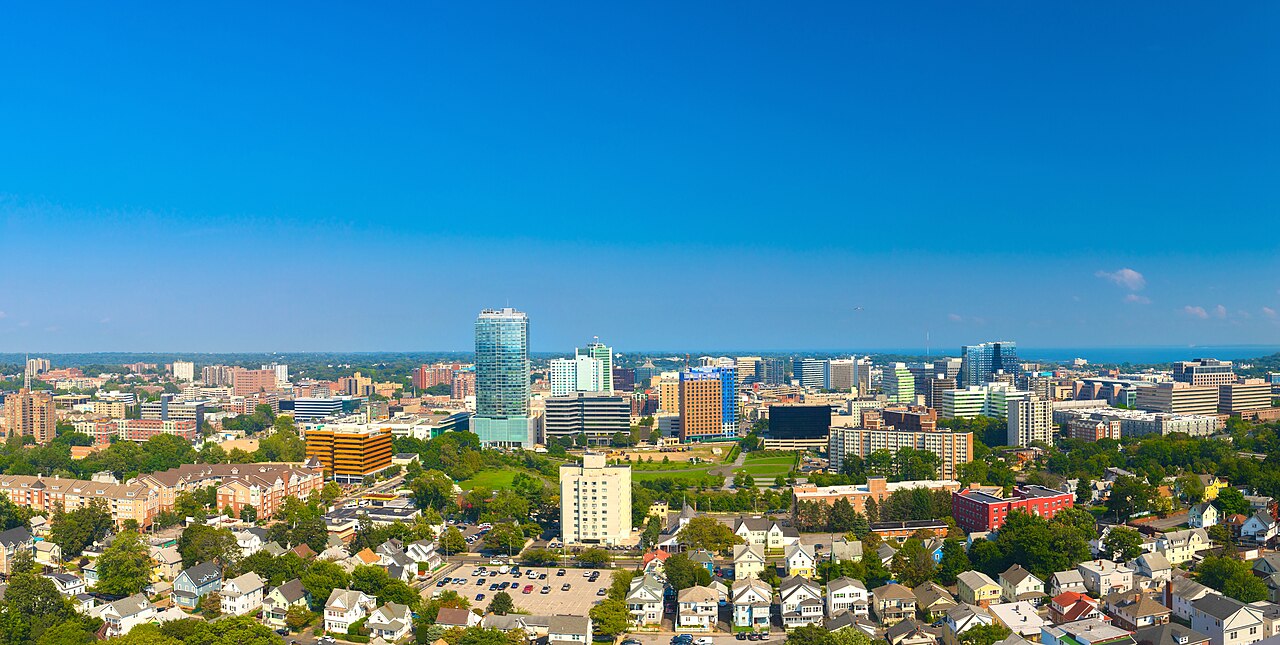
Stamford is worth considering if you regularly travel to New York, as the train ride takes 50-60 minutes, making it one of the most convenient cities in the state in terms of transportation.
Rent here is more expensive, averaging $2,300, with utility bills that can be a significant drain on your budget, so affordability is also quite relative.
In our experience, Stamford is more often chosen by people who do not commute to the office five days a week. Note that there are also some good jobs available here. The city is appreciated by people who value a balance between commute time and quality of life in the city itself.
Norwalk, CT
Quintin Soloviev, CC BY 4.0, via Wikimedia Commons
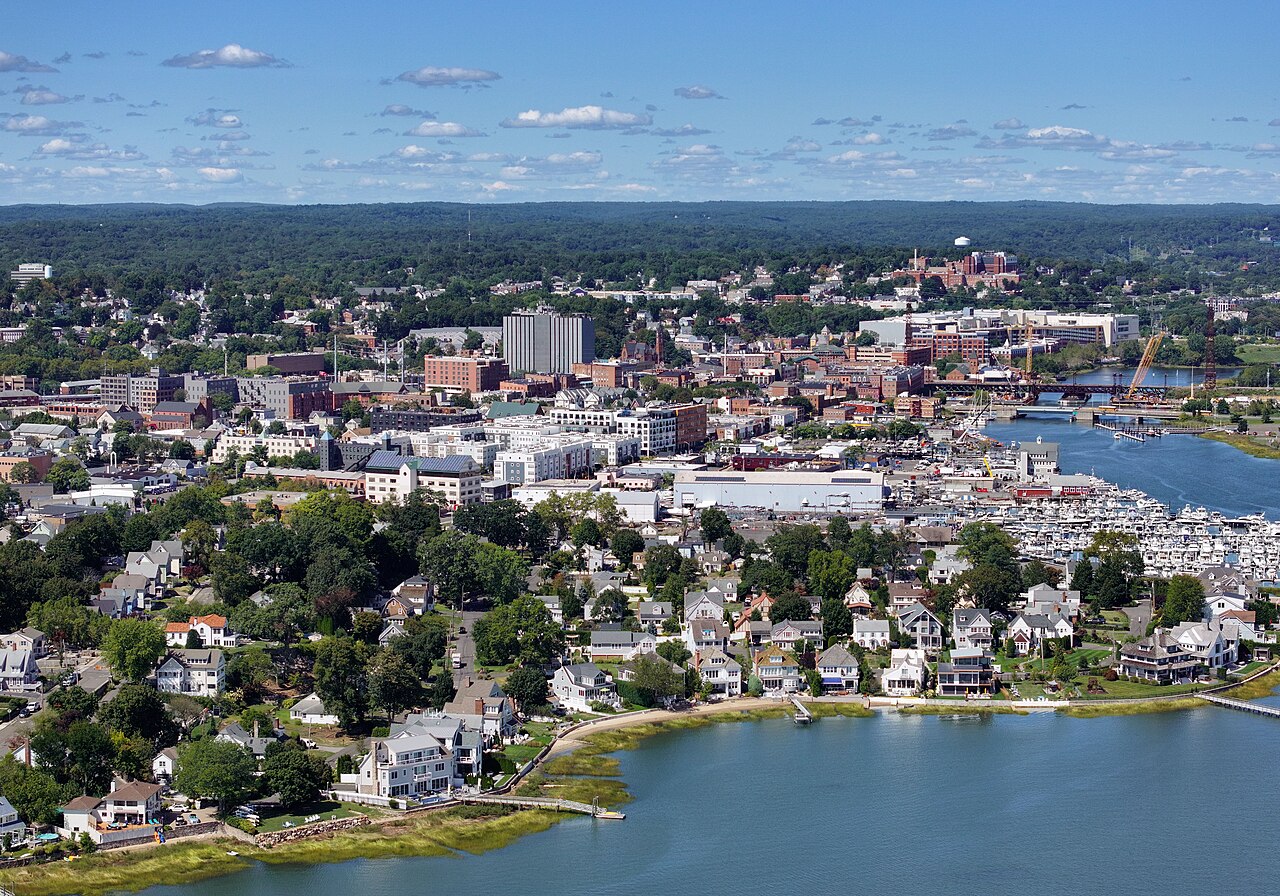
Norwalk is located between Stamford and Bridgeport and is often seen as a compromise between price and distance. The commute to New York City is usually about 60-75 minutes, depending on the type of train. Housing here is cheaper than in Stamford but more expensive than in Bridgeport.
In 2026, Norwalk is not always dramatically cheaper than Stamford, especially in newer apartment buildings or transit-friendly areas. One-bedroom rents often fall in the low-to-mid-$2,000s, while citywide averages can be higher depending on the property mix. It is still generally more affordable than the most expensive Fairfield County towns, but it should not be treated as a bargain by default.
As in other Connecticut cities, access to the Metro-North station remains key. Areas far from the railroad are significantly less attractive to commuters. A car is often necessary for everyday life.
Norwalk is suitable for those who are looking for a more peaceful environment and are willing to put up with a longer commute in order to reduce housing costs.
Connecticut may be a reasonable option for living near New York City if the railroad is within walking distance or a short drive away. Without this advantage, additional taxes, transportation costs, and utility expenses quickly offset the benefits of cheaper housing.
Pennsylvania: affordability with an extended time threshold
If you work in New York, Pennsylvania may not be the first place that comes to mind when considering where to live. However, it is possible to live here, but we must warn you that it will be extremely difficult without a car.
Easton, PA
Dougtone, CC BY-SA 2.0, via Wikimedia Commons
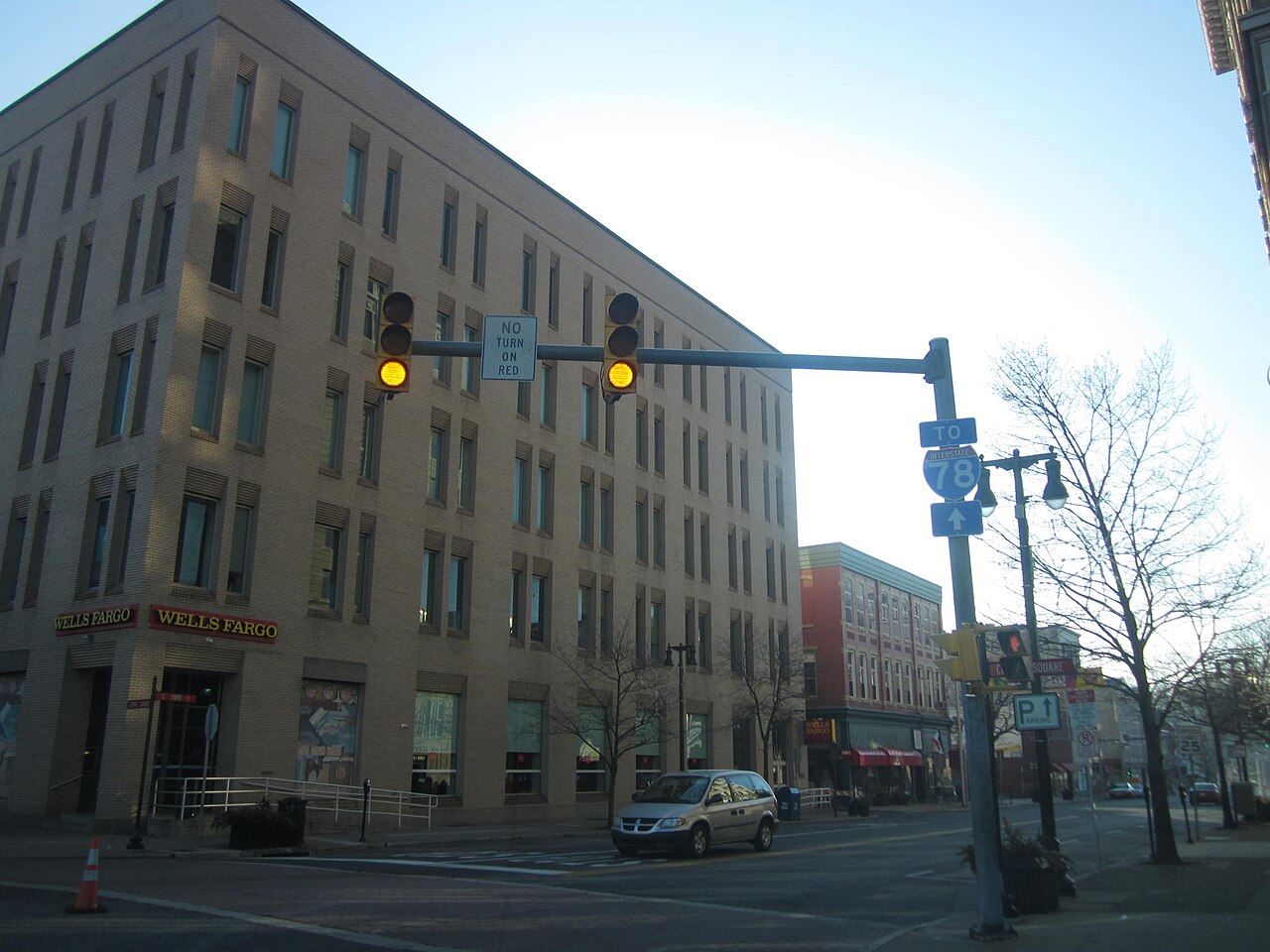
Of the possible options we suggest Easton which can be considered if you are buying a house. Renting a one-bedroom apartment is also inexpensive, averaging $1,450. Easton is one of the few cities in PA that is sometimes considered a “near-ish NYC” option. The commute takes about 1.5 hours and can take longer during rush hour.
There is no direct train connection to New York City which is why we mentioned a car above. Easton is suitable for those who work remotely or visit NYC occasionally, for example several times a month. For daily commutes this solution quickly loses its economic sense, as the time and transportation costs begin to outweigh the benefits of cheap housing.
The most affordable options near NYC - depending on the situation
The cheapest options for renters
New Jersey is the most popular choice for rentals. Connecticut and Easton, PA are not included among the absolute cheapest rental options and because their distance from New York City, although public transportation is available there.
Newark NJ is often considered because of its good balance of rent and commute time, especially if the place is close to a station. Elizabeth, NJ has similar prices, but it's easier to have a car for everyday trips and shopping. Mount Vernon, NY is a good fit for people who value trains and predictable schedules, even with higher taxes.
The most affordable options for buying a home
When buying a home, the cost of the house and taxes are decisive factors, so the situation is different from renting. Paterson, NJ is one of the cheapest options near New York City, with an average home price of around $520,000 according to Zillow.
Easton, PA is suitable for those who are willing to spend more time commuting to work in New York, but the average home price here is significantly lower at around $380,000. Such cities are usually chosen by buyers who are willing to trade time or convenience for a lower housing price.
The most affordable options for families
For families, convenience, stability, schools, and community organization are often the most important factors. Yonkers, NY is often chosen for its balance of schools, train access, and proximity to NYC. New Rochelle, NY attracts families with its transportation and infrastructure, but requires a willingness to pay high taxes. Norwalk, CT is quieter than the nearby suburbs, but it takes longer to get to the city. When choosing, it is worth looking not only at the city, but also at the specific school district, as the difference within one location can be significant.
Options with the shortest commute
If your main priority is minimal commute time rather than housing costs, your options are limited. Jersey City, NJ offers the fastest access to both Midtown and Downtown Manhattan. Newark, NJ requires a slightly longer commute but wins out in terms of housing costs. Yonkers, NY offers reliable train service and predictable travel times. These cities are more often chosen by those who commute to the office almost every day and don't want to be dependent on traffic jams.
Hidden costs of living near NYC
Even in the most affordable suburbs of New York City, the final costs often turn out to be higher than expected. Below is a list of the main expenses that regularly arise after moving and change the real cost of living near the city. This section is necessary to compare options fairly, rather than just looking at the rental price.
Property taxes: the difference between NJ, NY, and CT
Taxes are one of the key factors that often throw off calculations. In New Jersey, property taxes are usually higher than in New York and Connecticut, and vary greatly depending on the specific city. In Westchester and some parts of the Lower Hudson Valley taxes are also high, especially in areas with good schools. In Connecticut rates may appear lower but local fees are often added.
Transportation
Commuting costs can quickly change the affordability calculation. PATH is often cheaper than commuter rail, but fares have increased in 2026. NJ Transit and Metro-North use route- or zone-based pricing, so monthly costs rise as you move farther from New York City.
The cheapest rent is not always the best deal if the commute requires multiple transfers, an expensive monthly pass, or a paid parking space at the station. When comparing suburbs, calculate the actual monthly cost of getting to your workplace, not just the travel time to Manhattan in general.
Parking
In areas near train stations parking often requires a separate budget. Street permits are limited, and garage spaces are more expensive than many people expect. In New Jersey and Connecticut, parking at stations is often paid and may require waiting in line.
Heating and type of house
Old houses are common in the suburbs of the New York region. In winter, oil or gas heating can cause sharp spikes in bills, especially if the house does not retain heat well. Apartments in pre-war buildings are often cheaper to rent but more expensive in terms of daily expenses.
Insurance and flood risk
In areas near water, insurance may be mandatory and expensive. This applies to parts of New Jersey, along the Hudson River, and some areas of Connecticut. Even when renting, additional insurance requirements may fall on the tenant.
Toll roads and car expenses
Driving into New York City can be much more expensive than it first appears. Bridge and tunnel tolls, fuel, insurance, maintenance, parking, and traffic delays can quickly erase the savings from cheaper housing farther away.
In addition, vehicles entering Manhattan’s Congestion Relief Zone south of 60th Street are charged a congestion toll. This makes driving to work especially expensive for commuters who enter central Manhattan regularly.
Before moving we recommend checking the annual tax for a specific address, whether it is included in the mortgage payment and how often it is revised, how much a monthly pass to Midtown and Downtown costs, taking into account express trains and transfers during rush hour, whether parking is included in the rent and what the price of a season ticket at the station is, with possible restrictions, what the heating bills are in winter and who pays them, as well as how many toll sections there are on the route and whether it is possible to bypass them without losing too much time.
Renting or buying
Let's answer one of the most important questions. After all, buying real estate in New York is incredibly expensive. The difference is not just about the price per square foot. In practice transportation costs, frequency of trips to New York, and, of course, property taxes will seriously affect the future cost. If you are looking at affordable suburbs then it’s probably worth buying if you do not commute to NYC every day; otherwise, we recommend renting. Renting remains a more flexible option for daily commuting, an unstable schedule, or the desire to test out the area without long-term commitments.
When calculating it is important to consider not only the mortgage payment but also the real cost of living near NYC: transportation, parking, heating, and insurance. These are the items that most often erase the supposed benefits of buying.
Conclusion
When all mandatory expenses are taken into account, Newark, NJ consistently emerges as the cheapest place to live near NYC for renters who commute to the city on a regular basis. Its combination of relatively low rents, direct train access to Manhattan, and manageable transportation costs makes it more affordable in practice than many seemingly cheaper suburbs.
In conclusion, we reiterate that choosing an affordable place to live near New York City comes down to a combination of budget, commute time, and lifestyle. Among the options considered, Newark is the overall cheapest option for renters, while Elizabeth is a close runner-up if you’re willing to trade a bit of convenience for slightly lower housing costs in some areas, Paterson for buying a home with a low down payment, and Jersey City for those who value convenient and quick access to Manhattan.
For families, Yonkers, New Rochelle, and Norwalk often offer the best compromise between space, infrastructure, and commute time to the city. For those without a car, the options are even more limited: only locations with frequent train and PATH access, primarily Jersey City and certain areas of Newark and Yonkers, are consistently viable.
Before making a final decision, it is worth checking current listings, the tax burden for a specific address, and driving the route to work during rush hour. These steps will help you understand which of the available suburbs near NYC really suits your budget and lifestyle.