


Updated: April 06, 2026
Boston remains one of the most expensive, yet highly desirable, cities in the United States. As of early 2026, the average rent here is approximately $3,400–$3,700 per month, and home prices exceed $750,000. Students and professionals continue to move to the city—largely thanks to its prestigious universities and thriving healthcare, biotechnology, finance, and technology sectors. Because of this, finding affordable housing in Boston is quite difficult. In this guide, we’ll highlight the most affordable neighborhoods to live in 2026—those with lower prices, convenient transportation, and a comfortable lifestyle. If you're planning a move, hiring professional movers in Boston will help you save time and ensure a quick and efficient move.
What does “affordable housing” mean in Boston?
In Boston, where median rent is high, we decided to classify anything significantly below $3,000 as affordable. According to recent housing data from Zillow, Boston consistently ranks among the top five most expensive rental markets in the United States, with limited inventory and high demand continuing to push prices upward in 2026. The average rent in Boston is 53% higher than the national average.
However, we didn’t just consider prices. In major cities, location efficiency plays a significant role. We defined this metric to include convenient access to public transportation, a well-developed pedestrian infrastructure, and shorter commutes. These factors help lower living costs, and in some cases, a slightly higher rent in a well-connected neighborhood can actually reduce overall monthly expenses. For example, housing in more remote areas may be cheaper, but long commutes, transportation costs, or the need for a car quickly eat into those savings. Additionally, affordable apartments are often located in older buildings with poor insulation, leading to high heating bills in the winter. And in areas with poor infrastructure, you have to spend more time and money traveling to get groceries and basic services.
As a result, the lowest rent isn’t always the best deal.
To create a practical and realistic ranking, we selected neighborhoods based on the following criteria:
- below-average housing costs
- access to MBTA transit lines
- proximity to major employment centers
- overall livability and demand trends
The Cheapest Neighborhoods in Boston
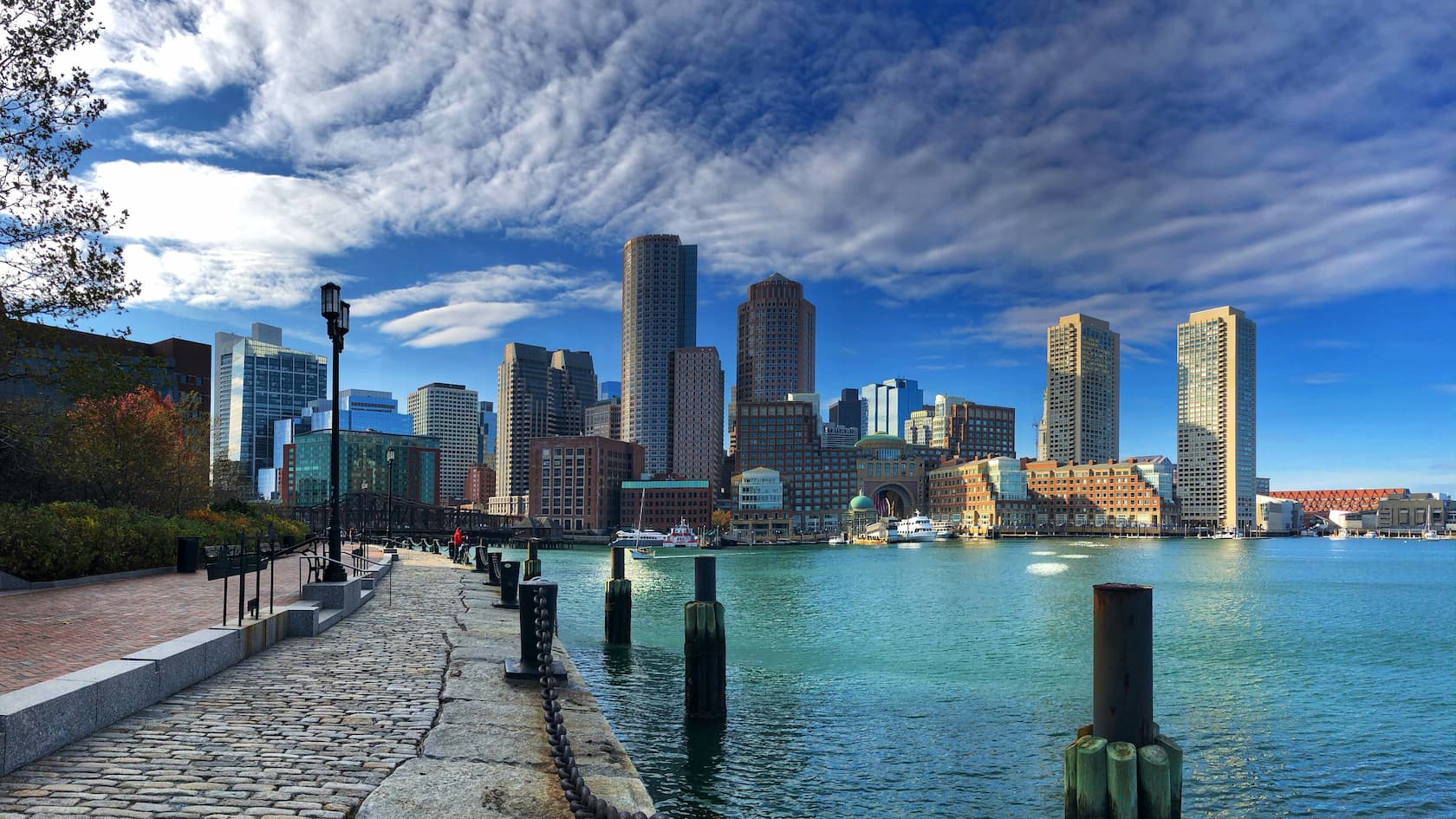
#1 Roxbury
Median rent:~$2,500
Median home price: ~$550,000–650,000
Savings: ~$1,000/month
Among the neighborhoods closest to downtown, Roxbury is one of the most affordable, yet it is also a rapidly developing area. Infrastructure is improving here, but prices are rising as well. With access to the Orange Line and buses, you can reach downtown in 15–35 minutes.
There is a wide variety of restaurants, museums, and cultural attractions here that reflect the neighborhood’s long history.
However, the neighborhood remains diverse. Differences between streets can be significant—both in terms of safety and housing quality. This isn’t a neighborhood where you can make a blanket choice—it’s important to check specific addresses. It may be a good fit for those who want a balance between price and location and are willing to invest time in finding a good micro-location.
#2 Mattapan
Median rent: ~$2,600
Median home price: ~$550,000–600,000
Savings (based on the average rent): ~$900 per month
Mattapan is located in southern Boston and consists mainly of older residential buildings with a lower density of commercial amenities. There are fewer cafes, entertainment options, and coworking spaces here, so if you don’t work remotely or simply want to go out and have some fun, you’ll need to travel to other parts of the city.
Mattapan is the most affordable neighborhood in Boston. The low prices here are due to its distance from downtown; the best way to get there is by bus or the Mattapan Trolley, transferring to the Red Line—the trip takes 35–55 minutes depending on traffic.
Please note that safety and neighborhood quality can vary from street to street, so choose your future home carefully. This neighborhood is ideal for those seeking maximum savings and willing to sacrifice some amenities.
#3 West Roxbury
Median rent: ~$2,600
Median home price: ~$700,000–800,000
Savings: ~$900/month
West Roxbury is further out; the commute to downtown takes about 35–55 minutes. It was originally part of Roxbury and was used primarily as farmland. There are more green spaces here, the streets are quieter, and the building density is lower compared to central neighborhoods. Real estate prices are rising in West Roxbury, and it features beautiful parks and good restaurants. Its distance from downtown explains the lower prices, and public transportation is less developed here. Utility costs may be slightly higher due to the greater number of homes with individual heating systems.
The neighborhood is a good fit for those who value peace and safety more than proximity to the city center, and who are willing to spend more time commuting.
#4 Beacon Hill
Median rent: ~$2,600
Median home price: ~$1,000,000+
Savings: ~$900/month
Beacon Hill is located right in the heart of Boston. The affordability of housing here is largely due to the size of the apartments and the fact that the housing stock consists mainly of older buildings. It’s a historic neighborhood with parks, restaurants, and business districts all within walking distance. The location makes public transportation unnecessary.
Walking around here is sure to leave a lasting impression—you could even compare it to strolling through a museum. Here, you can always visit actual museums, parks, and galleries—not just in a metaphorical sense.
One of the city’s most photogenic neighborhoods is ideal for those planning to rent here and sacrifice some apartment space for the sake of the location; buying a home here is very expensive.
#5 Roslindale
Median rent: ~$2,850
Median home price: ~$650,000–750,000
Savings: ~$650/month
Roslindale offers the best balance of price and quality of life. The neighborhood already has a well-developed local infrastructure, with plenty of cafes, shops, and public spaces. The established community life within the neighborhood reduces dependence on downtown; you can live here and handle many daily tasks without leaving the area. Residents once called Roslindale the “garden suburb” of Boston. It is home to the Arnold Arboretum—a 265-acre park that is part of Boston’s “Emerald Necklace.”
The commute to downtown takes about 30–50 minutes, usually with transfers. Roslindale is often seen as a “hidden gem”: not the most obvious choice, but very convenient for long-term living. It’s a good fit for those who want a comfortable environment without paying a premium for downtown.
#6 Mission Hill
Median rent: ~$3,000
Median home price: ~$700,000–850,000
Savings: ~$500/month
Mission Hill is located next to Roxbury, which we mentioned above. Medical centers and universities are also nearby, driving high demand. The neighborhood has convenient access to the Orange and Green subway lines and is right next to downtown, making it a good choice given its proximity to all kinds of activities and entertainment.
Prices here remain relatively affordable due to the high population density and student housing. It can be quite noisy, but the neighborhood is well-suited for students, doctors, and young professionals for whom time is more important than quiet.
#7 Dorchester
Median rent: ~$3,000
Median home price: ~$600,000–700,000
Savings: ~$500/month
Dorchester is one of Boston’s most diverse neighborhoods and, by extension, its largest. Dorchester has many different neighborhoods that can vary quite significantly, so affordable housing isn’t available everywhere here. Rather, the sheer size of the neighborhood keeps housing prices at a relatively affordable level.
As a result, transportation accessibility here also depends on the specific part of the neighborhood. If you live closer to the Red Line, it will make your life much easier, but housing will be more expensive. On average, the commute to downtown takes 20–45 minutes.
The size of the neighborhood complicates the search for housing; you’ll need to spend some time looking to find the best value for your money.
#8 East Boston
Median rent: ~$3,100
Median home price: ~$650,000–750,000
Savings: ~$400/month
East Boston is rapidly becoming more expensive, but it remains relatively affordable for now. More and more modern residential complexes are popping up here, and the neighborhood as a whole is actively attracting investment and new residents. East Boston is located across the harbor from downtown and is also close to the airport. Keep in mind that proximity to the airport means noise in some areas.
East Boston is attractive for its transportation accessibility; the Blue Line and water transportation allow you to reach downtown in 15–35 minutes.
The neighborhood is a good fit for those who want a modern environment and good connectivity to downtown.
Renting or Buying a Home in Affordable Areas of Boston
Next, we’ll move on to less fundamental questions, but one of the most common questions is: which is more cost-effective in Boston—renting or buying a home? Here, it’s important to consider your long-term plans. If you’re planning a short-term stay, renting is more cost-effective and offers greater flexibility. Buying makes sense if you plan to stay long-term, typically 5–10 years or more.
One advantage of buying is building equity, as real estate prices in Boston are steadily rising. But keep in mind that buying a home involves repairs, maintenance, insurance, and taxes. As a result, renting in more affordable neighborhoods will cost between $2,500 and $2,800, while buying may start at $3,500 to $3,800 per month.
| Factor | Renting | Buying |
|---|---|---|
| Monthly cost | Lower | Higher |
| Upfront cost | Minimal | Significant |
| Flexibility | High | Limited |
| Long-term value | None | Builds equity |
Hidden Costs of Living in Boston
When choosing an affordable neighborhood in Boston, it’s important to consider not only the rent but also other factors that may not be immediately apparent during your search. When assessing affordability, you can use the 30% rule, which states that housing costs should not exceed 30% of your income and is recommended by the U.S. Department of Housing and Urban Development. In Boston, finding affordable rental housing can be challenging, especially when it comes to additional costs.
If you find an affordable apartment, especially if it’s in an older building, your heating costs may be higher due to poor insulation. It’s important to consider transportation costs. Even with the MBTA, some people prefer to drive their own car or take a taxi. If you own a car, parking costs in some areas can add $150–$300 to your monthly expenses.
How to Find Cheap Apartments in Boston
Finding affordable, quality housing is never easy. Here, you’ll need to rely primarily on good timing and an understanding of the market to work them to your advantage.
1. Choose the right time to search
In Boston, the rental market is highly seasonal. According to Boston Pads, peak demand occurs around September 1st, when the majority of leases turn over or students move in. The best deals usually appear in the winter, when demand drops and there is less competition for apartments. You may also find more flexible landlords during this time.
2. Focus on “good value” neighborhoods, not just the cheapest ones
Locations slightly further from the most popular areas often offer better prices, but it’s always worth considering the “price-location” ratio. Cheaper neighborhoods don’t always end up being the best value; associated costs, such as transportation, can significantly affect your overall living expenses.
3. Prioritize transportation accessibility
Continuing on the topic of accessibility, look for housing within a comfortable walking distance of major MBTA lines. Sometimes it’s better to spend an extra $200 on rent than $400–$800 a month on a car
4. Don’t be afraid to negotiate
Here we return to the topic of landlords’ flexibility during off-peak seasons. If you’re lucky, you may be able to negotiate a lower rent if there are comparable competitive rental offers or if the apartment has been vacant for a long time.
5. Act quickly if you find a good option
Timing is crucial—a good apartment will always go fast. We recommend preparing all the necessary documents in advance so they’re always at your fingertips. You can also set up alerts on real estate search platforms to be the first to see listings.
6. Use different search channels
In addition to major platforms like Zillow, it’s worth checking listings with local agents, on Facebook groups, and among off-market listings. Word of mouth might also help.
7. Consider the total cost, not just the rent
Utilities, transportation, and parking can significantly increase your expenses—sometimes a more expensive apartment in a convenient neighborhood ends up being more cost-effective overall.
8. Consider the total cost, not just the rent
Utilities, transportation, and parking can significantly increase your expenses—sometimes a more expensive apartment in a convenient neighborhood ends up being more cost-effective overall.