

Updated: February 11, 2026
If you need to reserve a parking space for moving in Washington, D.C., getting a parking permit is usually straightforward—the main thing is to understand which agency is responsible for the type of permit you need. Most often, permits are issued either through the DC DMV (in the case of a Residential Parking Permit (RPP)) or through the DDOT Transportation Online Permitting System (TOPS), which is used to reserve temporary parking for trucks, containers, or PODs.
How to Determine Which Permit You Need
If you regularly park near your home, you will need a Residential Parking Permit (RPP), which can be obtained through the DC DMV. If you need to temporarily occupy street space for a moving truck, container, or delivery, you should apply for a Reserved Parking or Temporary Occupancy permit through the DDOT TOPS system.
Please note that in many areas of Washington, parking spaces fill up quickly, so it is recommended that you apply at least 1-2 weeks in advance to guarantee the space you need.
Main Types of Parking Permits in Washington, DC
In Washington, different types of parking permits are issued by different agencies, depending on what you need the parking space for. Here are the most common options:
1. Residential Parking Permit (RPP)
Issued through the DC DMV when you register your vehicle. This permit allows you to park in your residential area without time restrictions, if the area is assigned to your address.
2. Temporary Moving / Reserved Parking Permits
Used when you need to temporarily reserve parking spaces for moving, POD containers, or large deliveries. They are issued through the DDOT TOPS system and allow you to set up temporary “No Parking / Reserved Parking” signs for the desired dates, times, and number of spaces.
3. Visitor Parking Permits
Intended for guests of District residents. These permits allow visitors to park in residential areas longer than the established time limit. Only residents who are eligible can obtain them.
4. Contractor / Public Space Occupancy Permits
Required for contractors and service companies that need to temporarily occupy parking spaces or part of a public space for work. These permits are also issued through DDOT TOPS.
How to Reserve Moving Truck Parking in Washington, DC
Reserving a spot for a moving truck helps the team load and unload without worrying about getting a parking ticket. In DC, you can reserve parking for moving day through the DDOT Transportation Online Permitting System (TOPS) by selecting Parking / Occupancy Permits → Reserved Parking Signs / Moving Truck.
TOPS Application Walkthrough
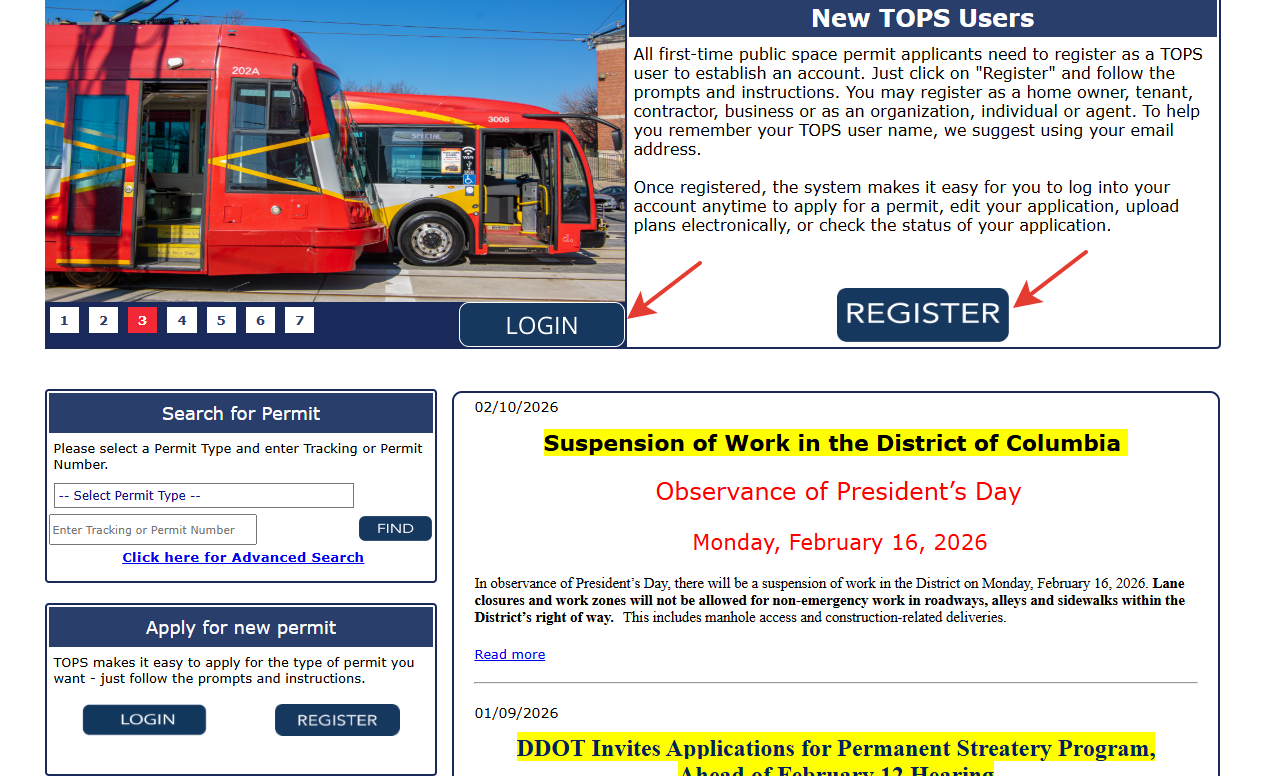
1. Log in to DDOT TOPS
Create an account if you do not already have one.
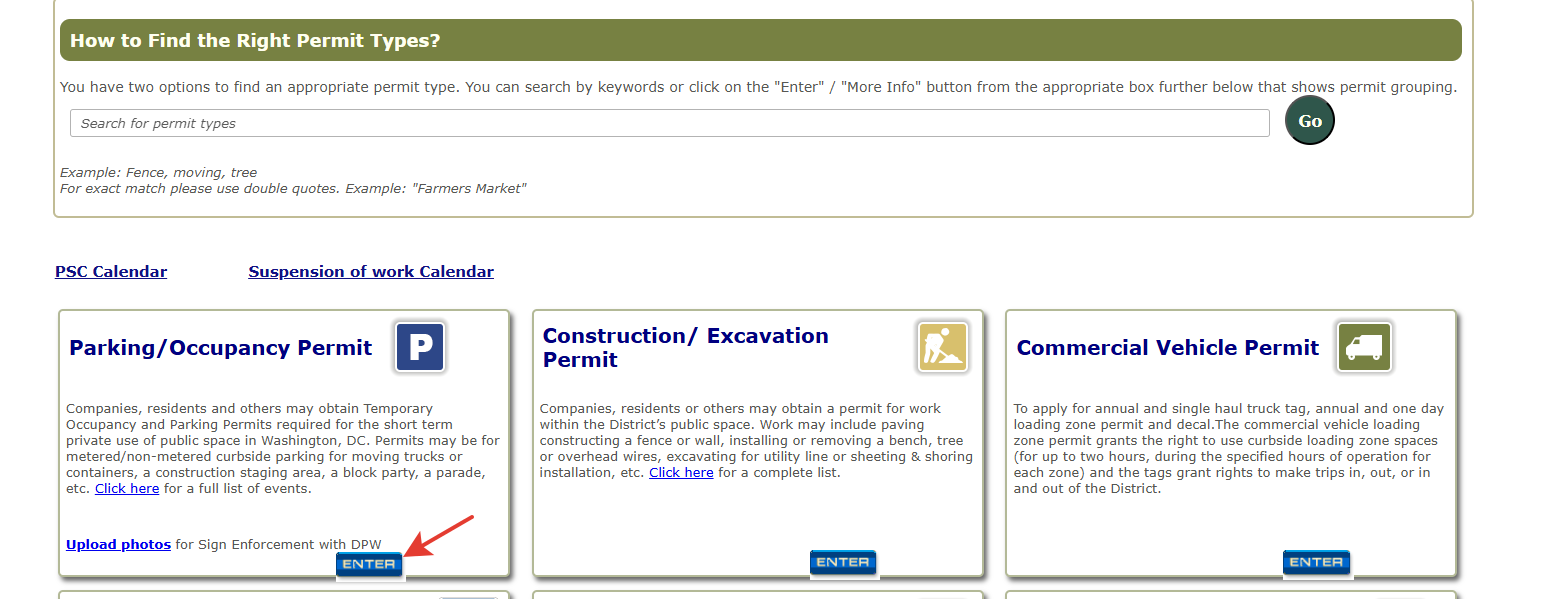
2. Start your Parking/Occupancy Permit application
Select Reserved Parking Signs/Moving Truck.
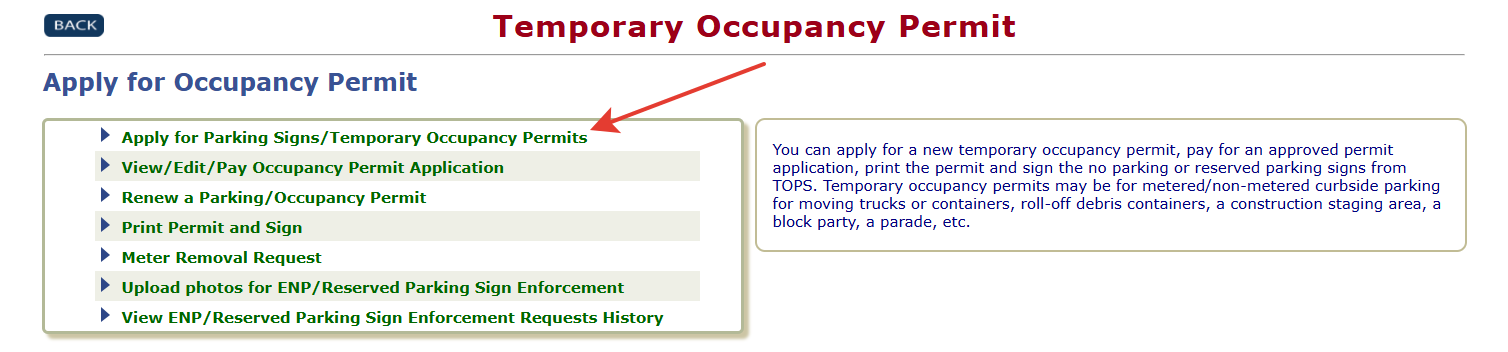

3. Enter your address and moving dates
Enter the exact address, start and end times, and indicate whether you need a reservation for loading, unloading, or both.

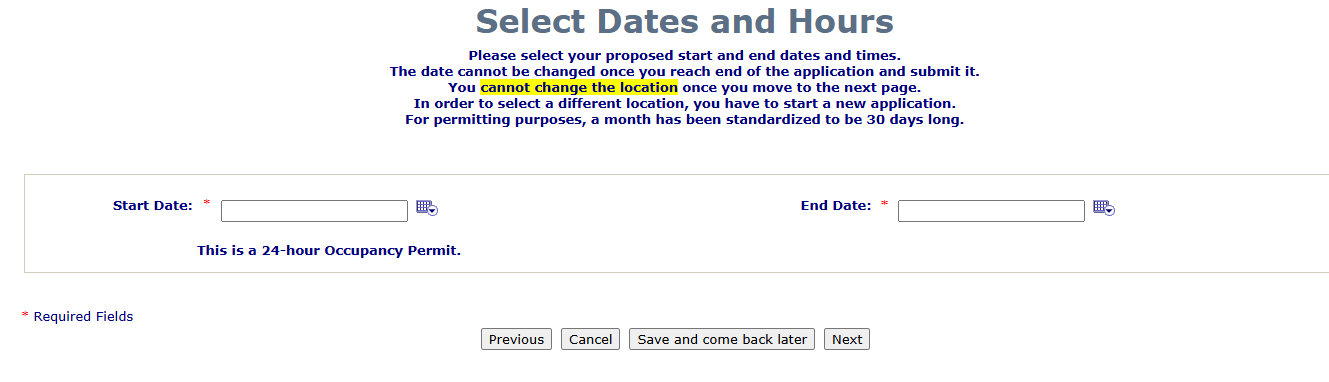
4. Select the desired curb space.
Specify either metered spaces (by parking meter numbers) or unmetered curb spaces (by the number of parking spaces the length of a car).
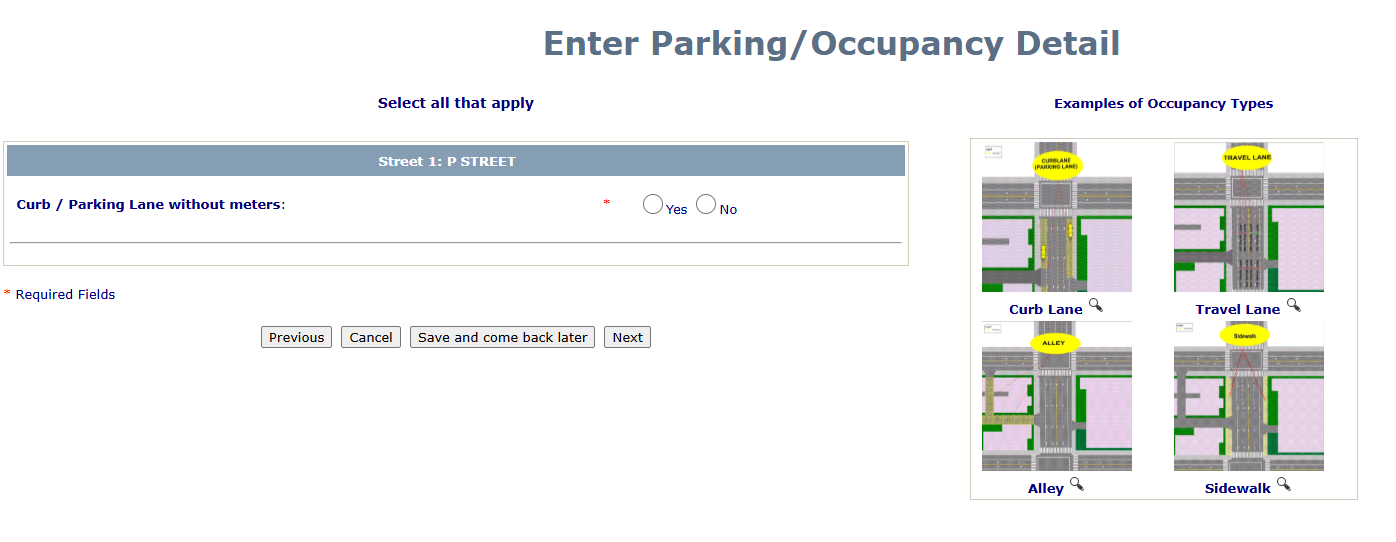
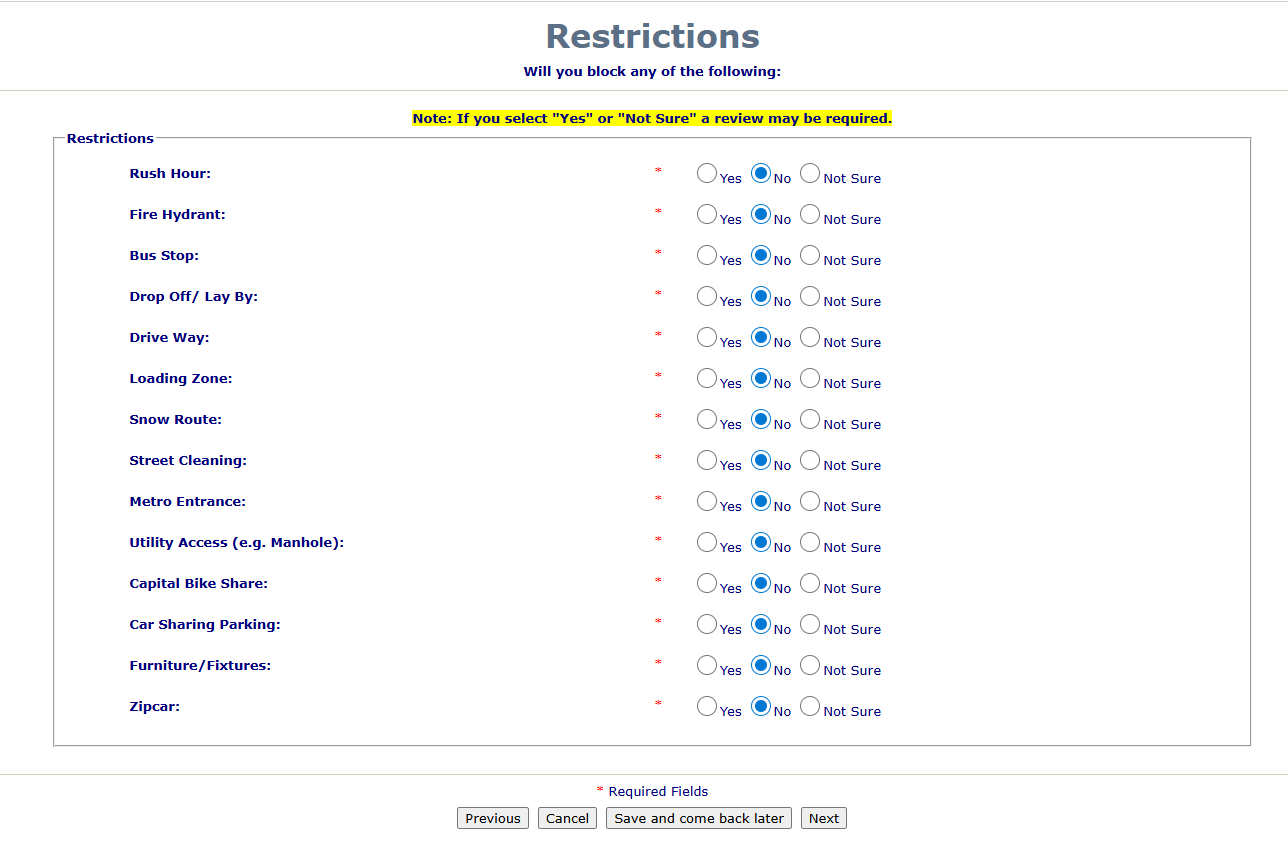
You will be asked about restrictions on your parking space. If you do not have this information, simply select “not sure.”
5. Check the cost and submit your application.
Once approved, you will receive instructions on how to print or pick up the official reserved parking signs.
Metered vs. Unmetered Parking
- Metered areas: Select the parking meter numbers closest to the address. Numbers are usually tied to specific sides of the street (odd and even numbers often refer to opposite sides).
- Unmetered residential streets: Specify the number of parking spaces needed based on the length of your vehicle. One space usually corresponds to the length of a standard passenger car.
The amount of space you need to reserve depends on the size of your truck. Small trucks that are 10–12 ft long usually require 2–3 car lengths, which is suitable for a studio or one-bedroom apartment. Trucks that are 14–17 ft long need about 3–4 parking spaces, which is sufficient for 2–3 bedroom apartments. For large trucks that are 20–26 ft long, it is recommended to reserve 4–5 spaces, which is usually sufficient for 3–5 bedroom homes. Very large trucks 28 ft or longer require 5 or more parking spaces and are more commonly used when moving large homes. It is advisable to reserve a little more space than the length of the truck to allow for easy maneuvering and use of the ramp.
Printing and Posting Reserved Parking Signs
After approval:
- Print or obtain official “No Parking / Reserved Parking” signs according to the instructions in your permit confirmation.
- Post the signs in the reserved area in advance according to the posting dates specified in your permit.
- Make sure the signs are clearly visible along the entire reserved area so that other vehicles can see the restriction.
Important: Signs prohibiting or reserving parking must be posted at least 24 hours in advance in commercial areas and at least 72 hours in advance in residential areas.
You can find the addresses of kiosks where you can print Parking Signs on the TOPS website:
TOPS Application Checklist
Please have the following information ready before submitting your application:
- Moving address and nearest intersection
(The exact location at the curb where the truck will be parked)
- Requested dates and time window
Allow sufficient time for both loading and unloading.
- Truck or container size
This is necessary to estimate the number of parking spaces needed.
- Number of parking spaces or parking meter numbers
Metered areas: identify the exact parking meter numbers on the correct side of the street.
Unmetered streets: estimate the number of parking spaces needed for the length of the vehicle.
- Applicant contact information
Name, phone number, and email address used for permit communication.
- Payment method
Required to complete the permit approval process.
Reserved Parking Signs Preparation Checklist
Once the permit has been approved, print out the official “No Parking / Reserved Parking” signs obtained through the permit system and prepare tape, zip ties, or other fasteners to securely attach them to the posts. Signs should be placed along the entire reserved area at the curb so that drivers can clearly see the restriction. Installation must be completed in advance, in accordance with the deadlines specified in the permit.
Signage Rules That Override Assumptions
Posted street signs always determine the actual parking rules. Even within the same neighborhood, neighboring blocks may have different restrictions, sections with and without parking meters may alternate on the same street, and temporary restrictions due to construction, events, or street cleaning may change parking availability. Therefore, it is important to check the signs at the exact address where the truck will be parked, rather than relying solely on the general rules for the neighborhood.