






Ismail and his team were fantastic Ismail and his team were fantastic! Efficient and quick workers, wouldn’t even let me lift a box!
I cannot recommend WellKnown enough. The team arrived early, packed quickly, and graciously moved all of my things into my new 5th floor walkup without a single complaint.
 Jillian Langford
Our customer · Chicago
VERIFIEDreal review
Jillian Langford
Our customer · Chicago
VERIFIEDreal review
WellKnown Moving Company plans residential and commercial moves from Chicago, Illinois, to Miami, Florida. Pickup is coordinated through our Chicago operation, with service across the city and nearby communities covered by our Chicago movers and Illinois pages. This is a long-distance interstate move handled under federal operating authority. Exact licensing details appear in the static credentials section of this page.
The drive covers roughly 1,380 miles and commonly follows I-65, I-24, I-75, and Florida’s Turnpike on the approach to South Florida. Highway distance is only one part of the plan. The truck also needs a legal loading position in Chicago and an approved place to unload in Miami. That may involve curb restrictions, a loading dock, a freight elevator, or building-specific move hours.
Moving Tip: Send us the pickup and delivery building rules before booking. Some Chicago ward moving signs are courtesy signs and are not enforceable. Eligible moving companies can arrange enforceable CDOT signs when the address requires them. Official guidance also says signs must be placed in legal spaces and generally posted at least 48 hours before the move. In the City of Miami, commercial vehicles do not qualify for ordinary residential parking permits, while Smart Loading Zones are intended for short periods of active loading. The customer must confirm the building’s curb, dock, elevator, and access rules. WellKnown can provide a Certificate of Insurance when one is required. Review Chicago moving-sign guidance and the Miami Parking Authority residential permit rules.
Your written flat-rate estimate is based on the inventory, access at both addresses, requested timing, and selected services. Before booking, disclose stairs, elevators, long carries, loading docks, restricted move hours, fragile or unusually heavy items, packing needs, storage, and extra stops. If the inventory, access, or service scope changes, the revision must be documented because it may affect the written plan and price.
The move is dispatched through our Chicago operation and assigned to an in-house, background-checked crew with an equipped moving truck and a designated lead mover. The crew protects the furniture, loads and secures the shipment, completes the interstate transport, unloads, and places items in the agreed rooms. Your move is booked as a dedicated shipment, so the truck is assigned to your belongings rather than combining them with other customers’ moves. A shared-load arrangement is available only as an optional lower-price service when offered, separately selected by the customer, and stated in the written flat-rate estimate. The customer portal can be used to manage the inventory and move details, but the customer remains responsible for keeping that information current and confirming that the Miami property is ready to receive the shipment.
Verify before booking: Review FMCSA Protect Your Move and compare the mover’s registration with the credentials displayed on this page. You can also read customer reviews before requesting an estimate.
How We Plan a Chicago-to-Miami Move
Planning begins with the Chicago pickup address, not just the number of boxes and furniture pieces. The coordinator reviews the legal truck position, stairs, elevators, loading-dock rules, long carries, packing scope, and unusual items. The crew then loads and secures the shipment for the southbound interstate trip. Before delivery, the customer must confirm the correct Miami municipality, building approval, receiving contact, keys, and the reserved dock or elevator window. Those details determine when the truck can arrive and how the unload should be staffed.
The route is approximately 1,380 miles. A passenger vehicle may cover it in about 20–21 hours, but a loaded moving truck needs a more realistic 23–24 hours of driving before loading, unloading, inspections, fuel stops, traffic, and required rest are added. Under FMCSA hours-of-service rules, a property-carrying driver may drive for up to 11 hours after 10 consecutive hours off duty and may not continue driving beyond the applicable 14-hour duty window. Loading uses part of the first duty day, so the earliest practical delivery is on operating day three. Delivery from Chicago to Miami is typically planned within a 3–5 business-day window. Your move coordinator confirms the specific written delivery window in the flat-rate estimate.
🔒 Protection: Every interstate move includes Basic Released Value Protection. Full-Value Protection is available as an upgrade when selected and documented before the move. Review the claims process and FMCSA’s Your Rights and Responsibilities When You Move before choosing a protection option.
Preparing for Delivery in Miami
Miami delivery rules depend on the municipality and the property. Within the City of Miami, commercial vehicles are not eligible for ordinary residential parking permits, and residential parking rules differ from the rules for Smart Loading Zones, which are intended for short active loading periods. Condo and managed-building procedures also vary because associations and property managers control common areas, elevators, docks, and move-in hours under the property’s governing documents. Florida’s Condominium Act provides the legal framework for those common elements. Before the truck reaches South Florida, confirm the municipality, building approval, COI wording, freight-elevator or dock reservation, legal truck position, keys, and receiving contact. During Atlantic hurricane season, which officially runs from June 1 through November 30, an active system may also affect roads or building access. Check the National Hurricane Center and FL511 when a system could affect the delivery period.
🌆 Miami arrival planning: Review the Miami Parking Authority residential permit rules and its Smart Loading Zone guidance. For a condo or managed property, request the current move-in packet directly from building management because the applicable rules are property-specific.
2 daysTypical transit
Flat rateNo hidden fees
LicensedInsured & bonded
PHOTO 01 / 01
on the job

Chicago → Miami
01
Services for your move to Miami
Chicago
2-day transit
Miami
HOW YOUR MOVE WORKS
/ 05 STAGES
Chicago to Miami Moving Process
Same five stages on every job.
Get a free estimate
01
Pre-move consultation
Same-day callback, priced from your real inventory.
− 3 weeks · 20 min
02
Plan & packing
Every material included, labeled room by room.
− 2 weeks · 1–2 days
03
Loading & transport
Signed inventory, then GPS the whole way down.
Day 1 · 6–8 hrs
04
Delivery & unpacking
Placed and reassembled; boxes hauled on request.
Day 2–4 · half day
05
Post-move support
Follow-up call, and claims handled in-house.
+ 48 hrs · same numberHow much does it cost to move from Chicago to Miami?
Planning prices for moving from Chicago to Miami are presented as flat-rate ranges. The written estimate is based on the inventory, Chicago pickup access, Miami delivery access, requested timing, shipment type, and the services included in the scope. Stairs, elevators, long carries, loading docks, restricted move hours, heavy or fragile items, packing, storage, and extra stops can move the estimate toward the higher part of the range. The booked move is not priced to the customer by weight or through an open-ended hourly total.
A self-packed one-bedroom move from a Chicago elevator building with legal truck access to a Miami building with a reserved loading dock is not the same job as a full-packing move from a Chicago walk-up with a long carry, followed by delivery to a condo with a narrow elevator window and limited truck space. The highway distance is the same, but the second move requires more handling time, paperwork, equipment, and access coordination.
The standard flat rate includes the in-house crew, equipped truck, dedicated shipment, fuel, tolls, mileage, loading, interstate transport, unloading, placement in the agreed rooms, basic disassembly and reassembly of standard furniture, furniture wrapping, door and floor protection, and Basic Released Value Protection. Review how pricing works. Optional packing and unpacking and storage can be added to the written scope. A shared-load service may sometimes be offered at a lower price, but it is not the default and must be separately selected and documented in the written estimate. Any approved change to the inventory, access, shipment type, or services must be recorded before it becomes part of the move. The “Average Price” column is a rounded planning figure inside the displayed range, not a statistical average calculated from completed route jobs.
Pick your move size
Starting flat rate
Route Chicago → Miami
$3,500
Studio / 1 bedroom
starting rate — not a quote
$0
$3k
$6k
$9k
$12k
Starting prices, not a quote.
These are the lowest rates we have booked on this route — best case: flexible dates, shared truck space, easy access at both ends. Your price is set by your own inventory, access, stairs and dates, so most quotes come in above these numbers. Only the written quote we send you is binding.
What’s included in the rate
All of it inside your rate — no add-ons
 Included
Loading & unloading
dollies, straps, ramps Included
Protection for furniture
blankets, wrap, corners Included
Transportation
truck, driver, mileage
Included
Furniture assembly & disassembly
beds always, more on request
Included
Liability coverage
no paperwork to chase
Included
Gas & tolls
even the turnpike
Quoted separately — only if you ask
Get your itemized estimate
Packing materials & labor
Storage
Specialty crating
You approve each one in writing before anything starts, and every estimate lists the six lines above as included beside your flat rate.
Two ZIPs and a date — that’s the whole quote
Written flat rate for your Chicago to Miami move. Takes about 30 seconds.
- No deposit to hold your date
- A real dispatcher calls back, same day
- No obligation — we never sell your details
From real moves. Pinned to the wall.
5.0
1,390 reviews
Ismail and his team were fantastic Ismail and his team were fantastic! Efficient and quick workers, wouldn’t even let me lift a box!
We moved from Houston to Austin. Thanks to Wellknow Moving for moving our furniture and belongings quickly and safely.
They showed up on time They showed up on time. Incredibly polite. My husband and I barely finished packing so they were patient with us while we finished some items. They took down TVs and everything was wrapped securely. They had to deal with our power going out while moving out of a condo and still kept going. Got to the house, unloaded and we were all set. Full service, excellent help. I’d highly recommend to anyone. Thanks guys!
They showed up on time They showed up on time. Incredibly polite. My husband and I barely finished packing so they were patient with us while we finished some items. They took down TVs and everything was wrapped securely. They had to deal with our power going out while moving out of a condo and still kept going. Got to the house, unloaded and we were all set. Full service, excellent help. I’d highly recommend to anyone. Thanks guys!
Ismail and his team provided an amazing… Ismail and his team provided an amazing moving service and were able to make my moving experience extremely easy despite issues with moving restrictions from both the building I moved out of and the building I moved into. They were fast and efficient, packing and unpacking everything in a little over an hour. I couldn't recommend them more and would definitely use them for my next move!
Ismail and his team provided an amazing… Ismail and his team provided an amazing moving service and were able to make my moving experience extremely easy despite issues with moving restrictions from both the building I moved out of and the building I moved into. They were fast and efficient, packing and unpacking everything in a little over an hour. I couldn't recommend them more and would definitely use them for my next move!
I moved from Boston to NYC and the team was super helpful and amazing. They packed up everything and made my move way easier. I’d definitely recommend them for any future moves across states.
Why people pick WellKnown for this route
A local company, not a broker
Years out of Chicago, running the Miami corridor every week — dispatched by people who know both ends.
A fixed price, agreed up front
Quoted flat-rate with no hidden fees — full service, or just the heavy lifting, shaped to your budget.
Homes, offices, and the awkward stuff
Apartments, houses, storefronts, and specialty equipment all move on the same contract.
Short-notice moves
Closing moved, lease fell through, job starts Monday — if we have a truck on the corridor, we’ll take it.
Request an estimate
usually answered the same day

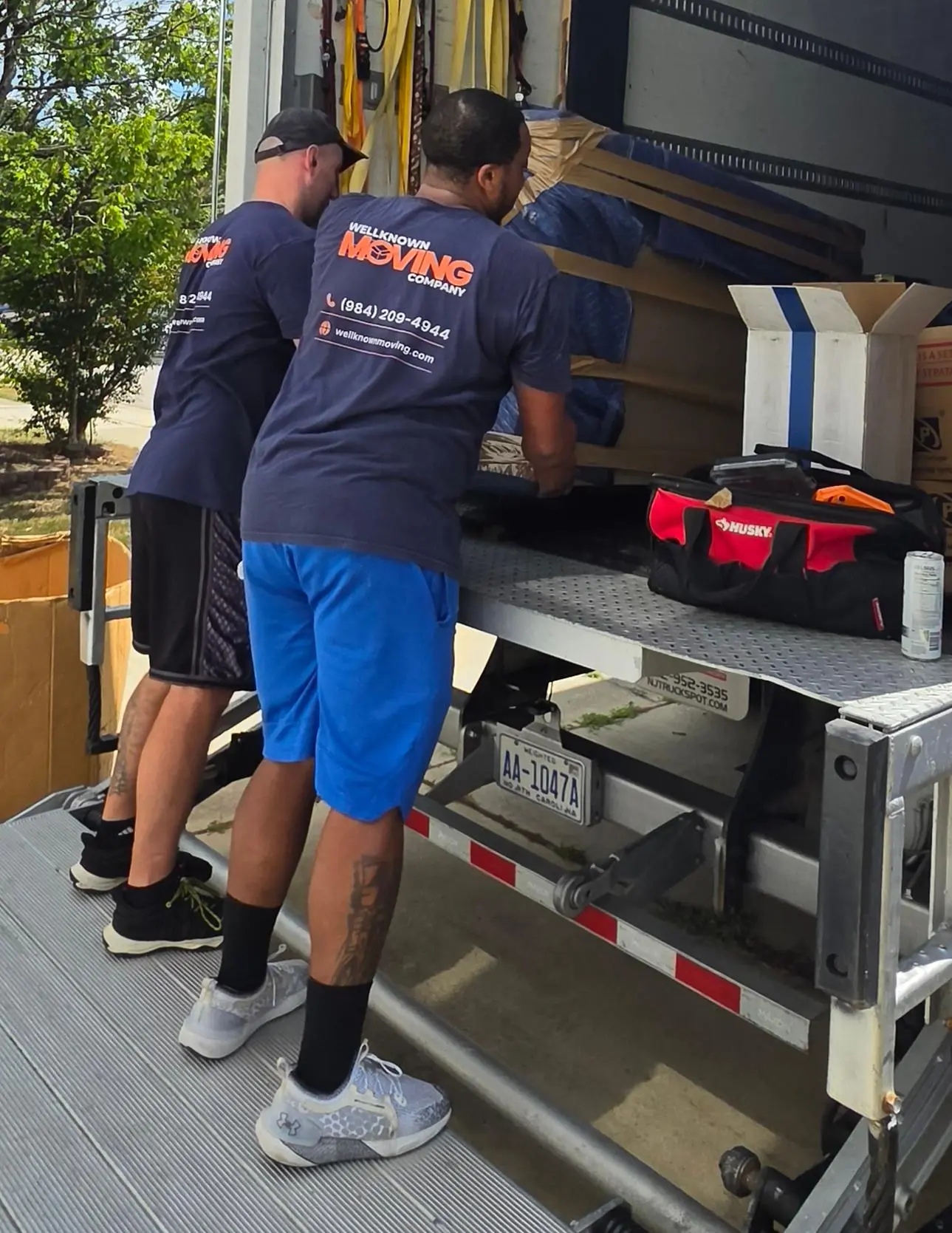

- Chicago-origin dispatch planning. The coordinator reviews the pickup address, legal curb access, and building requirements before scheduling the crew. The customer must disclose stairs, elevators, loading docks, restricted move hours, and any other access limitation before booking.
- A route-based delivery window. The approximately 1,380-mile trip is planned around realistic loaded-truck time and federal driving limits rather than passenger-car timing. The coordinator confirms the specific 3–5 business-day delivery window in writing.
- Miami access and COI coordination. WellKnown can issue a Certificate of Insurance when the destination building requires one and plan delivery around an approved dock or freight-elevator window. The customer must obtain the property’s current requirements and complete the reservation.
- A written flat-rate estimate. The estimate accounts for the disclosed inventory, access conditions, route, delivery requirements, and selected services. The booked price does not change merely because the work takes more or less time, but approved changes to the inventory, access, or scope must be documented.
- In-house crews, equipped trucks, and dedicated service. Background-checked employees use company equipment, furniture pads, shrink-wrap, dollies, straps, and floor protection. The booking guarantees a dedicated shipment unless the customer separately chooses an available shared-load option at a lower price. Any shared-load arrangement must be written into the estimate.
- A service scope built around the actual move. Residential moving, commercial moving, partial or full packing, unpacking, and storage can be included when approved in the written scope. Evening and weekend scheduling is available without a separate scheduling surcharge, subject to route capacity and building access.
Frequently Asked Questions
Straight answers about cost, timing, and what Miami is actually like once the truck is unloaded. No fine print games.
How much does it cost to move from Chicago to Miami?
The planning ranges on this page start at about $3,500 for a smaller move with simple access. The written flat-rate estimate depends on the inventory, pickup and delivery access, packing, storage, unusual items, extra stops, shipment type, and the Miami building’s move-in requirements. Standard service includes a dedicated shipment, fuel, tolls, mileage, loading, transport, unloading, furniture protection, and Basic Released Value Protection. A shared-load service may sometimes be offered as a separate lower-price option and must be selected and stated in writing.
How long does a move from Chicago to Miami take?
Delivery is typically planned within a 3–5 business-day window. The route requires about 23–24 hours of loaded-truck driving, and federal hours-of-service rules limit how much driving can be completed during each operating day. Loading time, traffic, mandatory rest, the Miami delivery appointment, severe weather, storage, or an added stop may affect the schedule. Your coordinator confirms the specific written delivery window in the flat-rate estimate. FMCSA hours-of-service rules here.
Will my Miami building require a Certificate of Insurance or elevator reservation?
A Miami condo or managed building may require advance approval, a Certificate of Insurance, and a reserved freight-elevator or loading-dock window. The exact rules are set by the individual property. The customer must obtain the current move-in packet and send the required COI wording to WellKnown. We can issue the Certificate of Insurance and plan delivery around the approved window. City of Miami parking information here.
What should I prepare before requesting an estimate?
Prepare a current inventory and identify heavy, fragile, oversized, or high-value items. Provide the floor level, stairs, elevator, loading dock, long carry, parking restrictions, move hours, and any packing or storage needs at both addresses. Confirm whether either building requires a Certificate of Insurance. Your move is booked as a dedicated shipment; tell the coordinator only if you would consider a separate shared-load option when one is available. The written flat-rate estimate is only as accurate as the inventory, access, shipment type, and service information supplied before booking.
What happens if a tropical system affects delivery to Miami?
Hurricane season does not automatically delay every move, but an active tropical system may close roads, change building access, or make unloading unsafe. WellKnown reviews route and destination conditions, while the customer must confirm that the property and building remain open and are accepting moves. If conditions materially change, the coordinator updates the delivery plan. National Hurricane Center; FL511.
Field notes
05 guides
Moving tips from the crew
Checklist
Moving Checklist
Week-by-week, from eight weeks out to the morning of the load. Read the guide CompareDIY Moving vs Hiring Professionals
Real numbers on the run: truck rental, fuel, days off work. Read the guide DownsizingMoving into a Smaller Space
What to cut first, and how to measure before you haul it across the country. Read the guide VettingChoosing the Right Moving Company
The five questions that separate a licensed carrier from a broker. Read the guide PackingDIY Packing Guide
Box sizes, wrapping order, and the rooms worth paying us to do. Read the guideEvery guide is written by the crew who runs this route — not a content team. Questions they don’t cover go straight to dispatch.
Get a free estimatePlease contact us if anything is unclear
WellKnown Moving Company Licensed, insured & bonded
- Address 859 Trace Dr, Buffalo Grove, IL 60089
- Phone (224) 521-4244
- Email [email protected]
- Hours Monday – Saturday9:00 AM – 5:00 PM
WellKnown Moving Company
859 Trace Dr, Buffalo Grove, IL 60089