

Table of Contents
Moving to Philadelphia, PA is usually more difficult for students not because of the moving process itself, but because there are deadlines and restrictions that are not always found in other college towns. Universities here keep track of arrival times, and the streets around campuses are quite busy, so unloading a car can be a problem.
If you’re moving to Philadelphia for college, this student moving guide Philadelphia is designed specifically for moving into UPenn and Drexel and covers both on-campus and off-campus housing in the University City area.
Philadelphia, particularly University City, is different from other cities. The streets are narrow, and parking is regulated in a way that directly affects the logistics of moving in. UPenn and Drexel use structured arrival processes, including assigned time slots and access requirements, which determine how and when you can actually move your belongings.
In this guide, you will learn how move-in works, how university systems and city regulations intersect, and how to plan your move to make it more organized.
University City Reality Check
When moving into University City, you will encounter heavy traffic, with thousands of students, parents, taxis, and rideshare services. UPenn and Drexel are located quite close to each other, so peak moving times may overlap. Traffic jams and parking problems are normal here.
Many parts of West Philadelphia have narrow streets, many one-way blocks, and virtually nowhere to stop without disrupting traffic. The easiest way to complicate your move is to arrive confident that you will find a spot. If your car blocks a lane, crosswalk, bus stop, or restricted area, you significantly increase your risk of a ticket or tow and waste time that should be spent unloading.
That’s why this University City move-in guide treats planning as a core move-in skill. You won't encounter such problems with parking and unloading at suburban campuses. In University City, small decisions – your arrival time, where you plan to stop, and having a realistic unloading plan – can determine whether your move takes 20 minutes or two hours.
UPenn Move-In: What Actually Happens
UPenn Move-In Timeline (2026)
When you start searching for “upenn move in day 2026,” you need to understand how UPenn organizes the move-in process. The university does not allow everyone to arrive at the same time. Penn Residential Services uses a move-in schedule that spreads students out over several days and assigns specific arrival time slots.
The UPenn move-in dates you see on the university's official pages are just the outer framework of the process. Within that process, you are assigned a more specific arrival time or time slot, usually through the student housing system and email. First-year students, transfers, and returning students may not move in on the same day, and the schedule changes from year to year, so the official calendar is always your primary source of information.
They are tied to when university staff are ready to receive you and when the unloading area is set up. If you reserve your trip or truck in advance without taking the assigned window into account, you will definitely encounter difficulties.
The move-in schedule will be the framework for your move. First, you wait for the official move-in dates and your arrival time, and then you organize your flight, drive, truck rental, and help from family or friends around that.
Penn Residential Services You’ll Use During Move-In
Move-in at UPenn is coordinated through a set of systems, each responsible for its own part of the process. Understanding the process makes move-in day much more organized. If you view them as optional, you are likely to encounter delays in registration, confusion about timing, or problems with access upon arrival.
At the top level is Penn Residential Services. This is the office that designs the overall Penn residential services move-in plan: which days are used for moving, how arrival time windows are formed, what rules apply to unloading, and how instructions are communicated to students. When you receive official letters about housing and move-in, they are usually based on information prepared by this office. Think of these messages as the foundation on which everything else is built.
You will interact most with the MyHomeAtPenn portal. This is the system where you can see your assigned housing, room details, and – most importantly – tools for selecting or confirming your arrival time. When you need to confirm or select MyHomeAtPenn arrival time, this is where you do it. Use the arrival window displayed in the system when planning your trip, renting a car or truck, and enlisting the help of family or friends.
The RHS Portal (Residential & Hospitality Services) is used to register guests according to UPenn rules so that the people helping you can enter the building without delay to assist with unloading.
Your PennCard brings everything together on move-in day. It's not just a student ID: it's the key that controls access to buildings and, in many cases, other campus services. Depending on how the process is organized in a given year, your PennCard may need to be issued, activated, or linked to your enrollment status before it will work reliably on doors and turnstiles. If you arrive assuming that everything will work automatically and it doesn't, you may find yourself standing in the hallway or outside your College House waiting for staff to let you in.
Together, Penn Residential Services communications, MyHomeAtPenn, the RHS Portal, and your PennCard form the operational framework for moving into UPenn. The more attentive you are to what each system requires of you, the fewer surprises you will encounter on your arrival day on campus.
Practical UPenn Move-In Constraints
Moving into UPenn depends not only on the time of your arrival. For UPenn move-in parking you are often expected to drive up, quickly unload your belongings, and immediately move your car or truck to make room for the next student. The easiest way is to plan ahead how to unload your belongings so that you can move your car away from the sidewalk as soon as your belongings are inside the building or in a temporary storage area. After unloading, follow UPenn's official instructions on where to leave your car.
UPenn move-in volunteers can help you. They will tell you where to pull up, give you carts, and help you carry boxes from your car to the building, but they are not professional movers – they don’t stay with one student the whole time. If you label your boxes and arrange your belongings so that they are easy to carry, their help will be most useful.
The elevators are also busy on move-in days. If you pack your belongings in boxes and containers that can be stacked on top of each other, it will speed up the whole process considerably.
Finally, there’s the question of shipping boxes to UPenn dorm. If everything is organized correctly, sending some of your belongings in advance reduces the number of bags you need to carry with you. But this only works if you follow the university's instructions exactly: where to send them, how to label the boxes, and when they should arrive. It is better to send only sturdy, non-essential items in advance and take everything you need for the first few days with you in the car or on the plane.
Drexel Move-In: Key Differences Students Miss

Drexel Housing Structure
At Drexel, housing is handled by Drexel Housing & Residence Life, which is responsible for residential buildings, room assignments, and the rules governing student housing. When you receive official communications about your housing assignment, packing list, and arrival time, this information usually comes from or is coordinated with this office.
Drexel Housing also publishes move-in calendars that outline the order of your move. These calendars indicate when residence halls open, when first-year students and returning students should arrive, and how these dates relate to the start of classes.
When planning, it is worth considering Drexel Housing & Residence Life and the official calendars as the main guidelines for your move-in. First, you wait for information about when your accommodation is ready and when your group should arrive, and then you adjust everything else to this – tickets, picking up items from storage, renting a car, and getting help from family or friends.
Drexel Move-In Timing
When you Google “Drexel move in day 2026,” you won't see that all students must arrive on the same day with boxes and carts. You will see the Drexel Housing calendars mentioned in the previous section. Those calendars show the official Drexel move dates for different groups of students and different dorms – and this is the first thing you should look at as soon as the calendar is published for your year.
Within these move-in dates, Drexel may assign you or allow you to choose a specific move-in time slot to prevent everyone from arriving at once and overloading the space and staff.
The basis of your move will be the official move-in date and assigned time slot. First, you look at where you fall on the schedule, and only then do you adjust your flight, drive, or truck rental accordingly.
For 2026, Drexel will determine the exact move-in structure itself; your responsibility is to understand that the dates and time slots are important. They are the framework that will allow you to plan your move reliably and make your move-in day easier.
Non-Negotiables
For Drexel, there are several mandatory requirements that form the basis of any move-in plan. If you skip them, no matter how perfectly you pack your belongings, you may encounter problems when moving.
The first is Drexel immunization required move-in. Drexel University requires all incoming undergraduate and graduate students to complete an immunization record. Students enrolled in online programs are not required to comply with the university's vaccination policy. If your medical records are not submitted, verified, or approved by the university's deadlines, it may create a “block” that will pop up just when you are trying to get your keys or check in.
The second non-negotiable is the set of Drexel dorm prohibited items. The university publishes a list of items that cannot be brought into residential buildings for safety and university policy reasons. Before moving in, check the list of prohibited items. It is best to do this before purchasing and packing anything large or expensive, especially appliances, lighting fixtures, and any devices that generate heat.
Once those two risk areas are under control, you can think about what goes on your Drexel dorm packing list. You need to take exactly what you need for the first few weeks of dorm life. This usually means items in a few key categories – bedding, school supplies, a basic set of food and drink items, seasonal clothing, and a minimal set of tools or small repair items – and leave the bulky items for later, when you see the space and discuss it with your neighbors.
All of this comes together in a simple Drexel move-in checklist you can work through before you arrive:
- confirm your immunization clearance,
- check your official move-in date and time slot,
- review the prohibited items list,
- finalize your packing plan, and make sure your travel and unloading plans line up with what the university expects.
If each of those boxes is conceptually checked before you leave home, you’re far less likely to run into a surprise that stops move-in at the door.
Off-Campus Move-Ins Near UPenn & Drexel
Moving into a dormitory and moving into an off-campus apartment in University City are two completely different experiences. When you move into UPenn or Drexel housing, the process is organized in advance by the university: you are assigned time slots, there is a registration desk on site, and there are often volunteers and carts to speed up the flow of people. When you moving to University City, Philadelphia apartment, you are responsible for everything.
Parking is entirely your responsibility. Off-campus buildings may have a small parking lot, a drop-off area, or just a piece of sidewalk on a narrow street. Think about parking permits in advance; more on that below.
In addition, many residential buildings have their own rules: some require you to plan your move-in time in advance at the reception desk or with the management company; some only allow moves during certain hours; some require you to use the freight elevator so as not to block the passenger elevator.
When you look at student housing near UPenn or Drexel move-in, it is helpful to choose an area that combines convenience for everyday life with adequate moving logistics. If you live close enough to walk to campus, you won't have to rely on a car every day, which is important in an area where parking is limited. A convenient walking route or easy access to transportation may be more important than proximity to your favorite coffee shop.
From a residential perspective, it is also important to consider how easily a car or truck can arrive, unload, and depart on that particular day without blocking the entire street.
Therefore, it makes sense to consider best neighborhoods near UPenn or Drexel for students not in terms of rankings, but in practical terms. Various neighborhoods in University City within walking distance of campus, as well as parts of West Philadelphia with good transportation lines, are ideal if they offer a balance of three factors:
- Reasonable travel time to campus.
- Streets where you can stop for a short time to unload.
- A management company with clear rules for moving in.
Philadelphia Parking & Permits
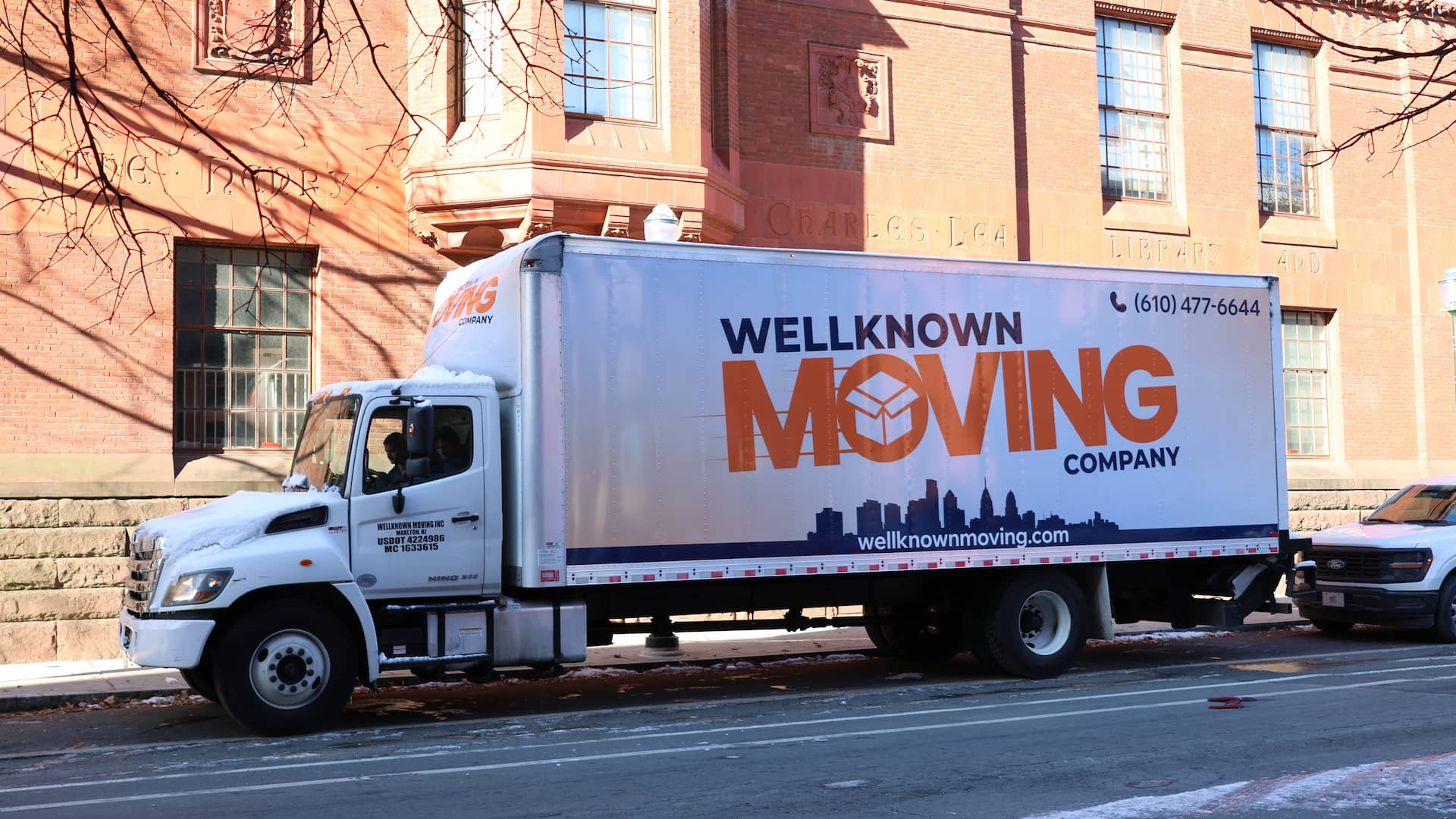
When you arrive on move-in day at University City, keep in mind that the area is very dense, and if you are coming to West Philadelphia by car, van, or especially a truck, understanding the permit options in Philadelphia, 19104, becomes a real advantage.
Temporary No Parking Permits
A Temporary No Parking (TNP) permit is a city document that allows you to reserve a section of the street by temporarily prohibiting parking during certain hours. In practice, this means that you place official signs in advance, and when your truck arrives, you already have a free space for parking and unloading.
Students most often need a TNP if they are using a larger vehicle and moving into or near University City, especially on narrow streets where all the spaces are usually taken. If you are planning a Philadelphia moving truck parking permit University City-type solution for off-campus housing, a TNP is usually the first tool to consider. Detailed step-by-step instructions on how to obtain a temporary no parking permit in Philadelphia for a truck can be found here.
When a TNP Is Not Enough
Sometimes a TNP alone is not enough. In some cases, when your move blocks the roadway or significantly narrows the road, you may need additional permits. This is where the Streets Department/Right-of-Way Unit comes in, when public space (right-of-way) is more seriously affected and permits higher than the basic TNP may be required.
In some cases–usually for larger operations–you may encounter terms such as Philadelphia streets department right-of-way permit or even a street closure permit Philadelphia moving companies may need when they’re blocking more than just a parking lane. Most students with a small truck or van do not need to close streets, but it is important to understand that there is a higher level of permits. This makes it clear that you can’t just stop anywhere and expect to unload quickly.
Enforcement Reality
All these rules are enforced by the Philadelphia Parking Authority (PPA). Their job is to monitor signs, regulations, and time restrictions regardless of whether the car belongs to a student, resident, or moving company. On move-in days, it is not uncommon to see people double-parking, stopping in bus zones, or occupying spaces that partially block crosswalks or fire hydrants. It is in these situations that fines are issued – and sometimes cars are towed. If you obtain the correct permit in advance and observe the areas where you can and cannot stop or park, you will avoid fines and protect your move-in schedule.
A truck that needs to be moved urgently or that has been towed away completely ruins the plan. Thinking through permits and possible interactions with enforcement in advance may not be the most exciting part of moving to college, but in Philadelphia, it's one of the main reasons why move-in goes according to plan and doesn't turn into a story about what went wrong.
Transit, Traffic & Arrival Strategy
When moving in, it is helpful to separate two tasks: “getting to campus yourself” and “getting your belongings to campus.” In many cases, SEPTA is a convenient way for students with just a few bags to get to University City, Philadelphia from the airport or 30th Street Station.
Problems usually arise when students try to manage everything by car on their own. One-way streets, traffic, parking, and unloading bags on your own are rarely easy to manage. During rush hour, the streets around UPenn and Drexel are very busy, and it is best for one person to focus solely on driving and parking while others quickly carry items inside the building.
When planning your arrival time, the best “arrival window” will always be the one assigned to you by the university. In addition, it is wise to arrive during daylight hours and not arrive at the last minute of your time slot.
Before arriving, find out which side of the building the entrance is on and where to park. Pack your belongings so that they can be quickly transferred to a cart or lobby without having to unpack bags on the sidewalk. Once your belongings have been unloaded, the driver should immediately move the vehicle to a parking lot recommended by the university or city, rather than trying to hold a spot at the curb just in case.
With this approach, public transportation, cars, and drop-offs become tools that you control, rather than creating additional problems.
Professional Help and Services
When moving, sooner or later there comes a time when you have to decide how much physical work you are willing to do yourself. Sometimes a car and a couple of helpers are enough. For other more complex cases, it is wiser to hire professional movers in University City (Philadelphia) who know how to organize the process. Professional crews are especially helpful if you have heavy furniture, a narrow arrival window, or a building with strict rules regarding moving times and procedures. They can focus on quickly moving items from the truck to the room while you take care of registration, keys, and documents.
If you are arriving early or traveling from far away and would prefer to send your belongings ahead of time, storage near UPenn or storage near Drexel may be the ideal interim solution. Storage can simplify a complicated move. You store your belongings nearby and then arrange for a short, simple move from the storage facility to your dorm or apartment on the day you actually move in. In many cases, this is easier than trying to synchronize your arrival flight or long drive with the very specific time window given by the university.
If you decide to do it yourself and rent a car, options like U-Haul University City and other moving truck rental Philadelphia companies are great – if you factor in parking and permits A rental truck is only useful if you know in advance where it will be parked, how long it can stay there, and who will be able to help you unload it quickly.
Final Move-In Checklist
For UPenn:
To summarize what we wrote in the main part of the text, we advise you to first pay attention to the fact that you:
- Read the latest information from Penn Residential Services and confirmed your official move-in date.
- Logged into MyHomeAtPenn and verified your arrival time, and planned your travel around that.
- Completed anything required in the RHS Portal for guests or helpers, so the people coming with you can get into the building.
- Followed UPenn’s guidance for your PennCard so you understand when and how it will work for building access on move-in day.
- Decided what you are bringing with you versus what you might ship, keeping elevator bottlenecks and room size in mind.
For Drexel University:
Before you travel to Drexel, make sure you have:
- Checked the official Drexel Housing Calendars and confirmed your move-in date for your specific residence hall.
- Noted your assigned or selected Drexel move-in time slot and lined up your travel or truck rental around that window.
- Verified your drexel immunization required move-in status through official Drexel channels so you don’t run into a hold at check-in.
- Reviewed Drexel’s current list of Drexel dorm prohibited items and adjusted your Drexel dorm packing list so you aren’t bringing anything that will be rejected at the door.
- Broken your packing into manageable, clearly labeled containers that can be moved efficiently through elevators or stairwells.
Permits, Parking, and Documents
If you are traveling by car, van, or especially a truck, find out if you need a TNP permit or other permit at the unloading location, as well as who is responsible for obtaining it and installing signs. Keep all necessary documents handy: letters from the university and check-in instructions on your phone, a copy of your dorm room assignment, proof of identity, and any medical requirements, if applicable.
Arrival-Day Flow
On arrival day, decide in advance who will drive the car, who will check in, and who will carry bags inside. The basic procedure is simple: arrive at the appointed time, follow the university's instructions to the unloading area, quickly carry your belongings to a safe place inside the building, and then move your car to a long-term parking space. Once the car is out of the way, you can calmly settle into your room without worrying that you are getting in the way of other students moving in.